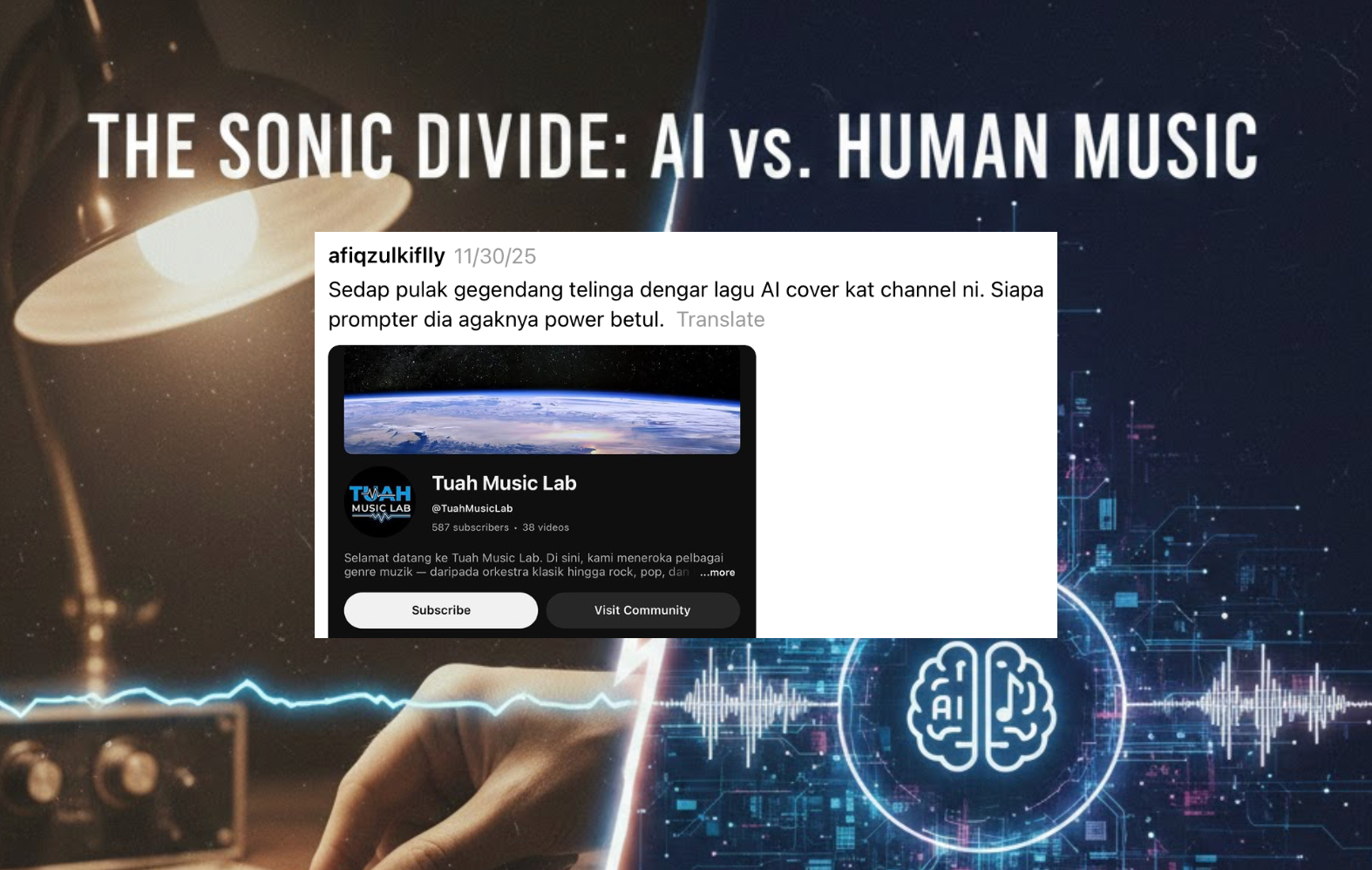
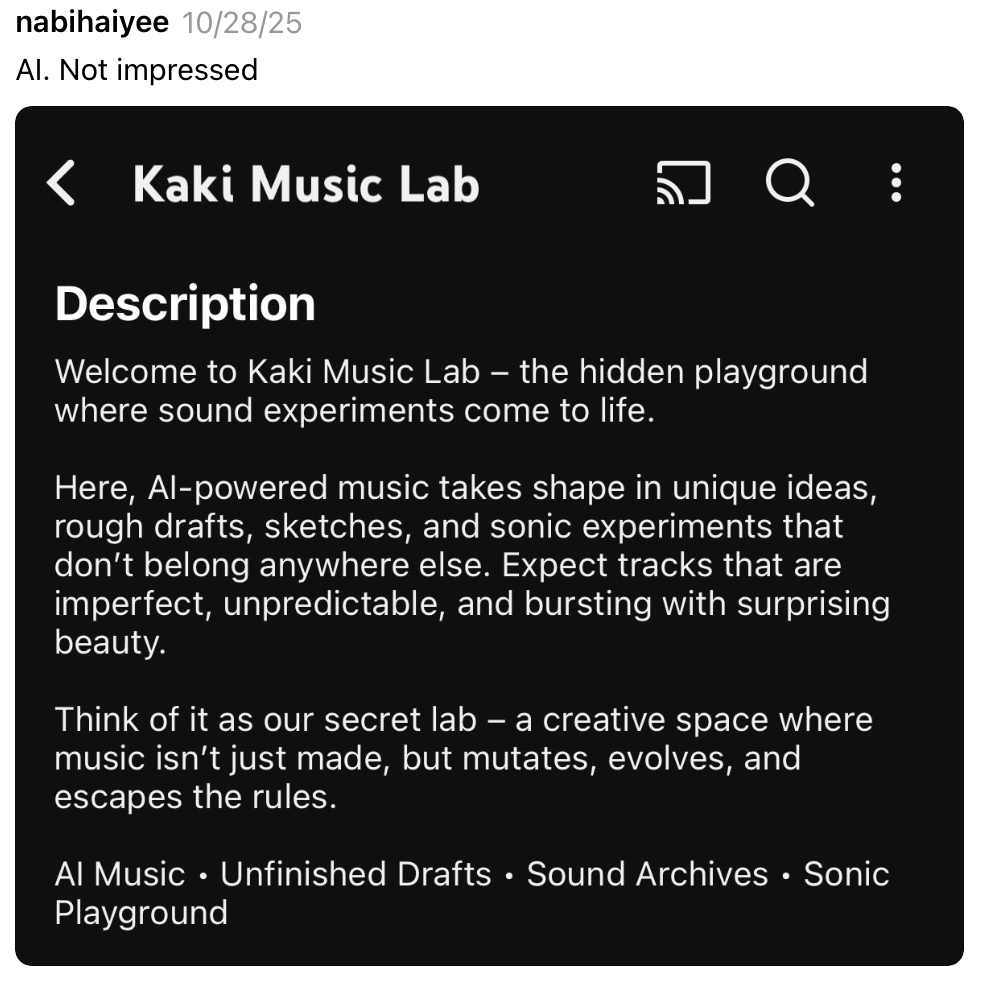
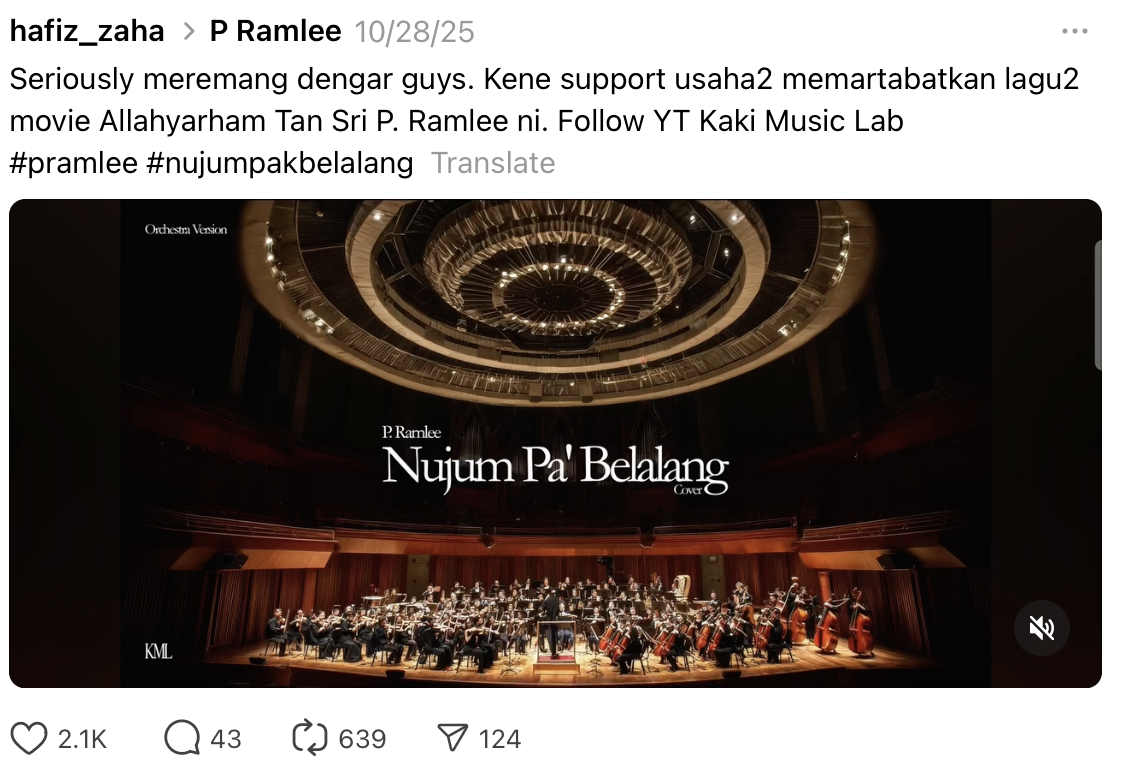
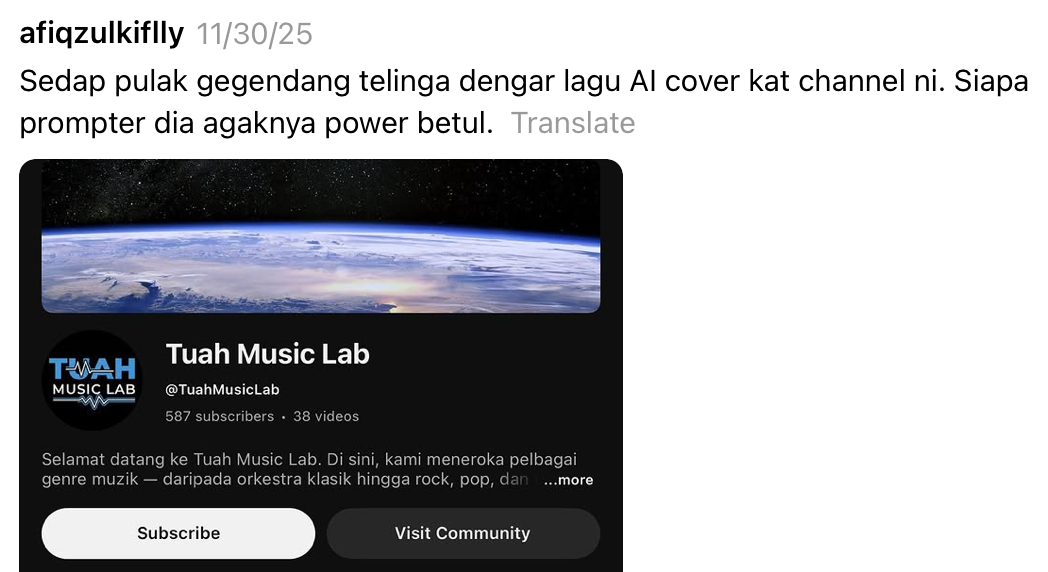
If you’ve been scrolling YouTube or Threads lately, you might have noticed a new wave of AI-driven music channels covering mainstream hits in ways you’ve never heard before. One of the channels that caught my eye is @KakiMusicLab, alongside others like @HujanRinduMasaLalu and @jivavivalab.
What makes these channels stand out? They don’t just copy songs. Instead, an AI re-sings the vocals and reimagines the arrangement from lush orchestral versions to smooth R&B soul renditions. The results are sometimes jaw-dropping, giving old hits a completely fresh vibe.
But not everyone is impressed. While some listeners marvel at the creativity and production quality, others argue these AI covers “destroy the soul of real human music”. The debate is heating up online, with discussions across social platforms like Threads, where opinions range from cautious appreciation to outright skepticism.

Recent Controversy: The “I Run” Case
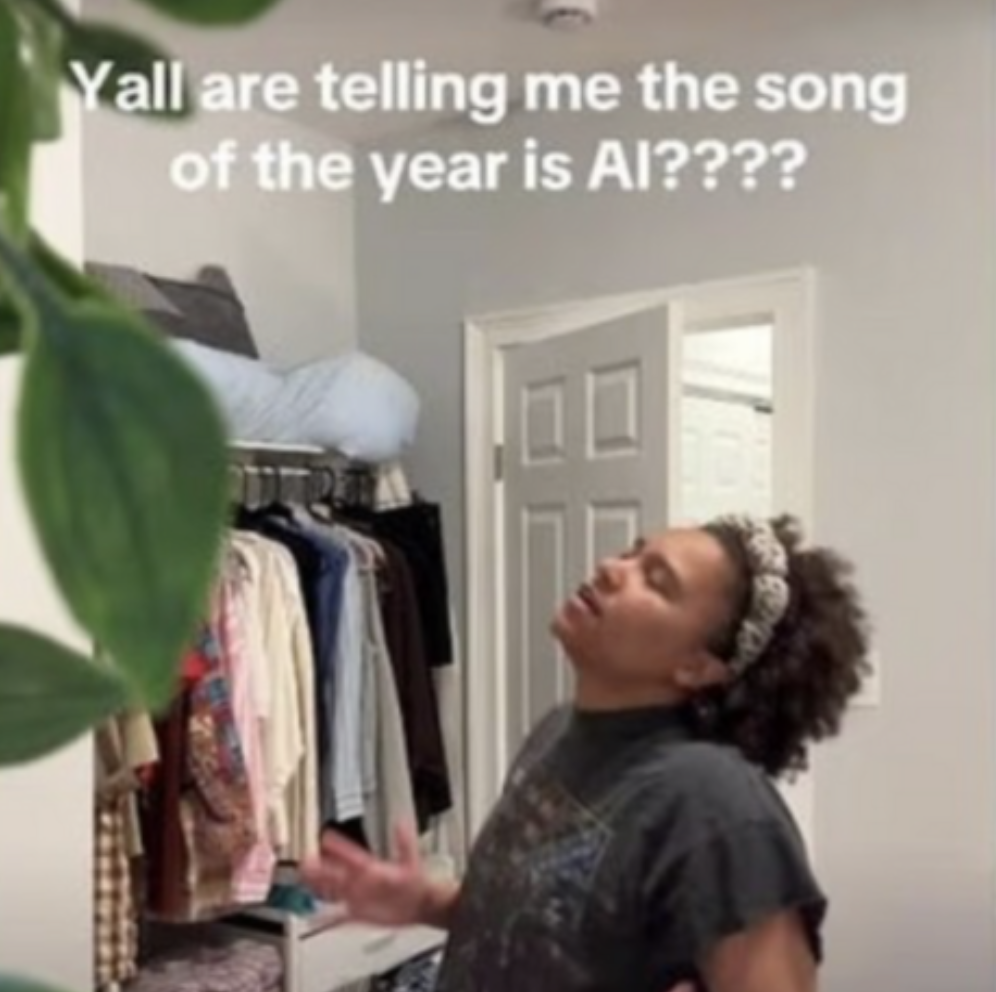
The conversation isn’t just academic. Recently, a track called I Run, created by British artists using AI-generated vocals, went viral until it was pulled from streaming platforms due to copyright and impersonation concerns. This incident highlights the complex legal and ethical questions surrounding AI music:
- Copyright: AI models are often trained on existing songs, sometimes without explicit permission. Who owns the output? Who gets paid?
- Authenticity: Critics say AI lacks the emotional nuance that real human musicians bring to a performance. Can AI ever truly “feel” a song?
- Industry impact: As AI-generated music becomes easier to produce, concerns rise about musicians’ livelihoods and the integrity of creative industries.
So, is this good or bad?
The truth is, it’s both. AI music expands creative possibilities, allowing listeners to experience familiar songs in entirely new ways. But it also raises serious ethical, legal, and cultural questions. Fans are divided and the industry is only beginning to grapple with what this means for the future of music.
Final Thoughts
Channels like @KakiMusicLab and others show just how far AI in music has come. Whether you see it as an exciting experiment or a threat to traditional music, there’s no denying one thing, AI music is here to stay and it’s making waves that musicians, listeners, and platforms alike cannot ignore.