
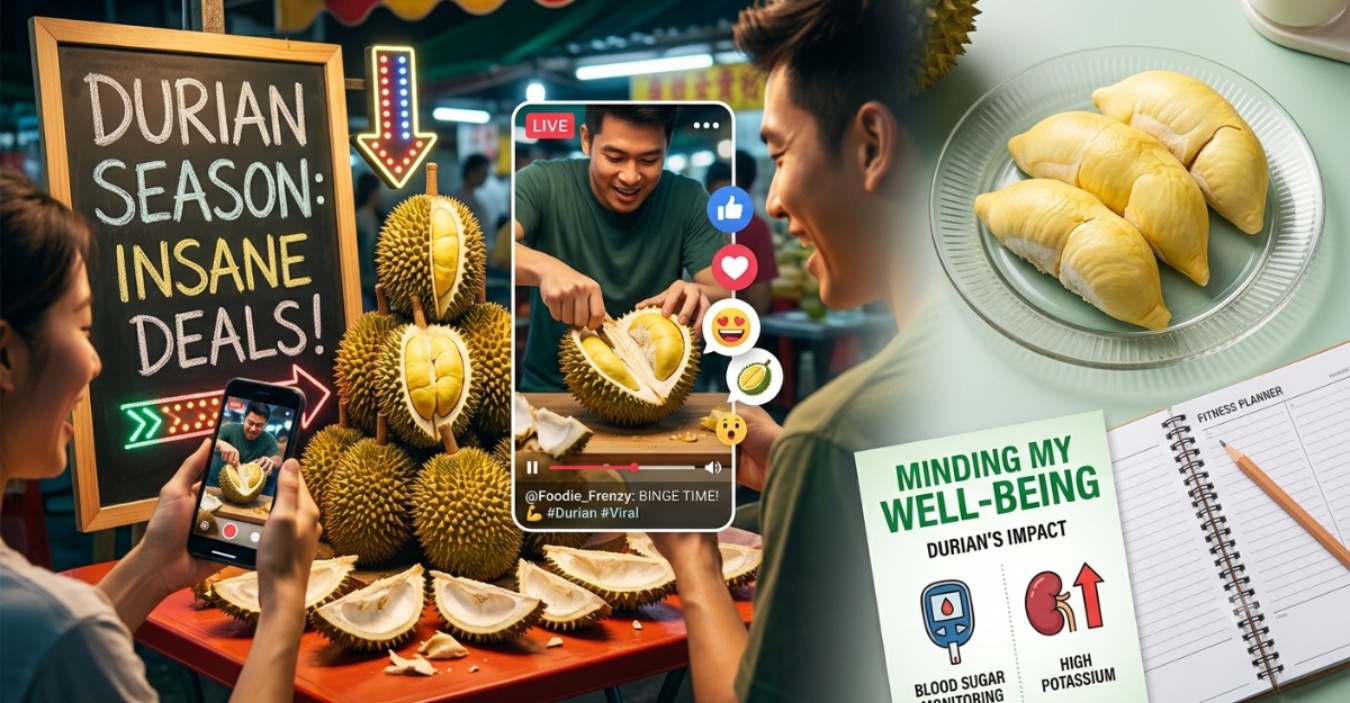
Durian season doesn’t just arrive, it takes over. Roadside stalls fill up with spiky fruit, while social media feeds are flooded with posts about “cheap durian deals” and seasonal promotions.
What starts as a simple harvest period quickly turns into a pop culture food moment, driven by hype, visuals, and online sharing.
When Affordability Drives Consumption
Lower prices often lead to bulk buying, not always out of necessity, but due to the sense of urgency that it is a “limited-time” opportunity.
In today’s content-driven food culture, seasonal foods like durian are often consumed in large quantities, shaped by online trends that highlight abundance, indulgence, and value-for-money experiences.
Health Considerations Often Overlooked
Despite its popularity, durian is a nutrient-dense fruit that requires mindful consumption.
For individuals with diabetes, excessive intake may lead to spikes in blood glucose levels. For those with kidney-related conditions, its high potassium content may pose additional risks.
Even for generally healthy individuals, overeating durian can cause bloating, digestive discomfort, and excessive calorie intake.
Food Culture Meets Content Culture
Modern eating habits are increasingly influenced by digital culture, where food is not only consumed but also shared and performed online.
From large portions to seasonal food challenges, consumption patterns are often shaped by what performs well on social media. Durian season naturally fits into this cycle of viral food culture.
More Than Just a Seasonal Fruit
While durian prices may drop during peak season, the health effects of overconsumption remain unchanged.
Durian continues to be an iconic seasonal fruit with strong cultural and social value. However, balanced consumption ensures that enjoyment does not come at the expense of well-being.
Source: Public Health Malaysia/ Facebook