Chocolate may still be an everyday indulgence, but consumers are increasingly paying attention to what sits behind it. From premium bars to more origin-led products, chocolate is now sold as much on story as on taste.
In Malaysia, that shift is becoming more visible. The local chocolate confectionery market is projected to reach USD 462.1 million by 2031, driven by consumers seeking better quality, stronger provenance and more thoughtful indulgence. As higher cocoa costs push brands towards smaller formats, stronger premium cues and more gift-ready presentation, chocolate is increasingly positioned as an accessible luxury rather than a routine treat.
But long before a bar of premium chocolate reaches the shelf, a different question takes shape upstream: what makes cacao worth preserving in the first place?
Why Cacao Matters in Pejalin
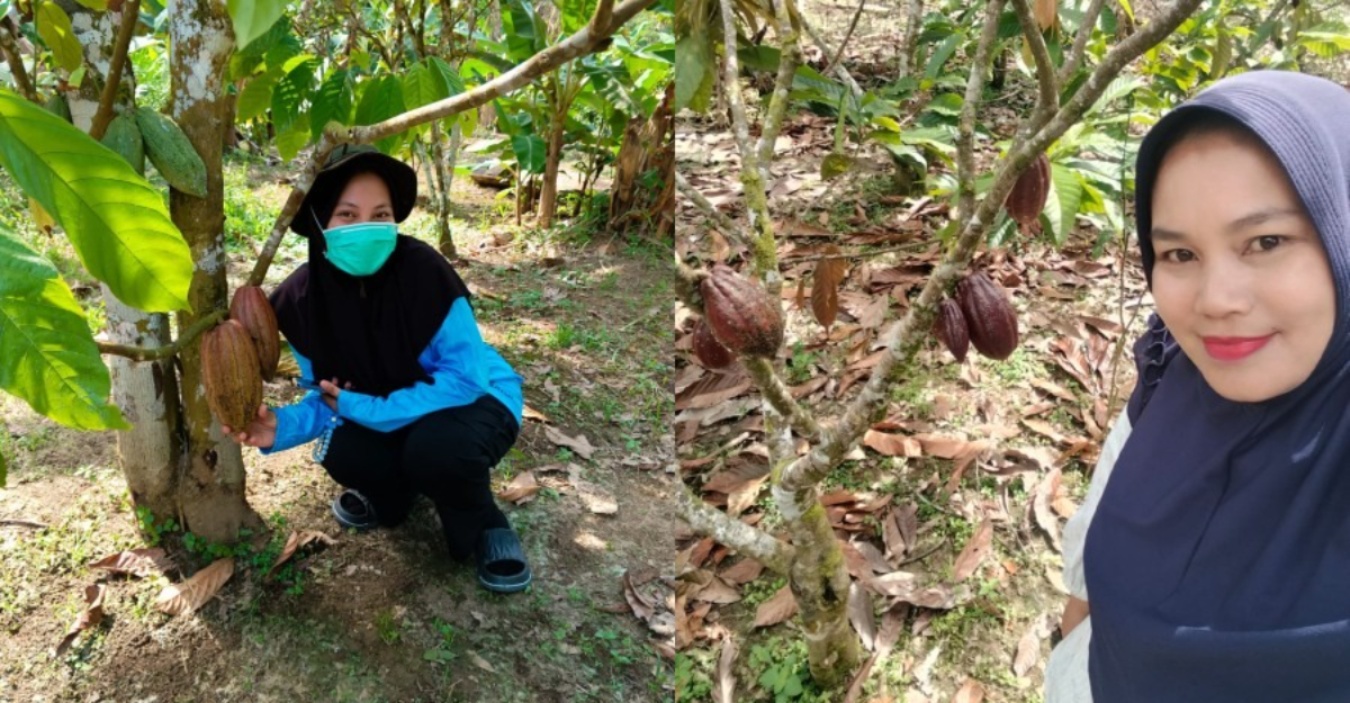
That question sits at the heart of Pejalin Village in Bulungan Regency, North Kalimantan, where a group of women are using cacao processing not only to generate income, but also to protect the landscape around them. Under the brand Kayan Koa, the women-led Kita Merong Joint Business Group (KUBE) is turning locally grown cacao into premium chocolate while helping keep more of its value within the village.
For Mardiatin, better known as 38 years old Ibu Yen, cacao is about more than business. Pejalin faces mounting pressure from oil palm expansion, with plantations covering around 5,000 hectares, compared with just 1,000 hectares of cacao. Yet cacao plays an important environmental role too, helping protect local water springs and the wider landscape that supports the village.
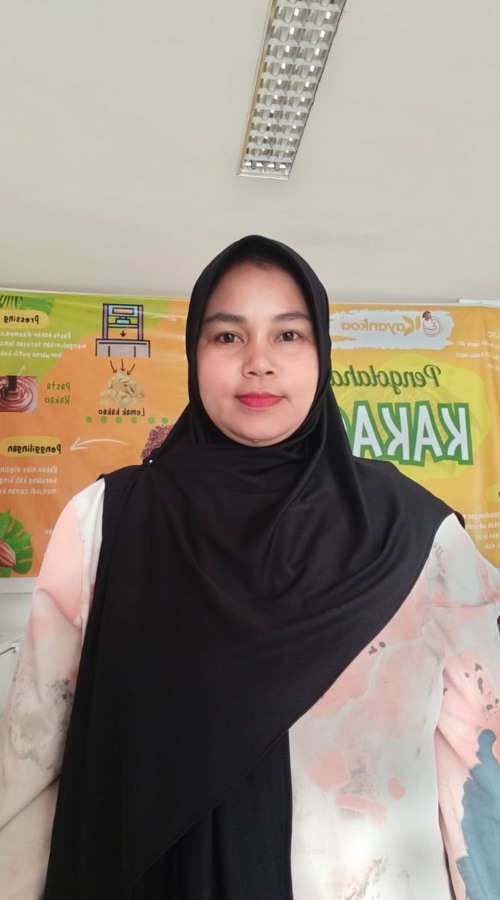
“At that time, cacao existed in the village, but it was mostly taken by outsiders at low prices. Farmers were losing their spirit. We thought, if we could process it right here in the village, the value would be entirely different,” said Mardiatin.
That opportunity began to open in late 2023, when Pejalin Village received support for green economic development through Indonesia’s Ecological-Based District Budget Transfer (TAKE) programme. With backing from the village government, the group received cacao- processing equipment in 2024 and began learning the craft from scratch, from selecting beans to tempering chocolate.
For Mardiatin, the decision to process cacao locally is also a way of resisting land conversion.
“If cacao has value and farmers can live off it, they won’t easily abandon their gardens. This is also about protecting our water and soil,” she said.
From Beans to Village Value
Today, KUBE Kita Merong processes cacao purchased directly from local farmers into chocolate bars, cocoa butter, cocoa powder and ready-to-brew cocoa products. Five of the group’s nine members are actively involved in daily production, handling around 300 kilograms of dried cacao beans each month. This makes Kayan Koa one of the few MSMEs to process cacao entirely from upstream to downstream.
“What differentiates us is that we process all the cacao ourselves until it is finished, not just the chocolate bars. The powder and the butter are also from here in Bulungan, so the taste is consistently authentic,” said Mardiatin.
Maintaining quality, however, remains a constant challenge. Many farmers still sell unfermented beans because fermentation takes time, delaying much-needed income and affecting flavour consistency.
“We do not dare take unfermented cacao because it greatly affects the taste and quality. Therefore, we must also provide education and insights to farmers so that the processing is correct,” said Mardiatin.
To improve standards, the group has been working with technical partners including Indonesia’s National Research and Innovation Agency (BRIN), while Universitas Kaltara (UNIKALTARA)’s local university researchers are exploring innovations such as white chocolate and cacao-husk tea. These efforts are helping Kayan Koa think beyond a single product and build a more resilient village-based value chain.
Restorative Economy Approach to Create Community Impact
The economic impact is already visible. Kayan Koa buys beans from Pejalin farmers at stable prices of IDR 80,000 to IDR 90,000 (MYR 18 to MYR 20) per kilogram, while monthly turnover has grown from around IDR 3 million to IDR 5 million (MYR 679 to MYR 1,132) in its early days to about IDR16 million (MYR3,622) today. The business has also created work for other women and young people in the village, especially during peak production periods.
For Mardiatin, though, the deeper change is not only about sales.
“Women in the village now have a role, an income, and are involved in development. My hope is that our production house can soon be fully established and that we can deepen our processing training so the quality remains consistent,” she said.
That wider story is also being carried beyond Pejalin by civil society organisation Pilar Nusantara Association (PINUS), which has helped elevate KUBE Kita Merong through digital platforms on eftindonesia.org and presented at forums like the 6th National Conference on Ecological Funding. By spotlighting community-led initiatives like Kayan Koa, PINUS is helping place women’s enterprise, ecological protection and local value creation within a broader restorative economy movement.
For Malaysia, where premium chocolate is increasingly tied to quality, origin and responsible production, Pejalin offers a timely reminder that what makes chocolate truly premium may begin long before the wrapper. In this village, cacao is not only creating a better product. It is helping keep water sources protected, livelihoods rooted and more of the value where it began.