

Malaysia’s urban skyline has transformed rapidly over the past decade. With land scarcity in key cities, high-rise living has become the norm rather than the exception. Condominiums, serviced apartments, and stratified developments continue to grow rapidly, with the statistics department noting an average annual growth rate of 2.5%.
But as more Malaysians move into these vertically stacked homes, a less visible issue is becoming increasingly common. Ceiling leaks.
What often starts as a faint stain or damp patch can quickly escalate into what many homeowners describe as an “upstairs neighbour’s nightmare”, where the source of the problem lies beyond your unit, yet the consequences are yours to deal with.
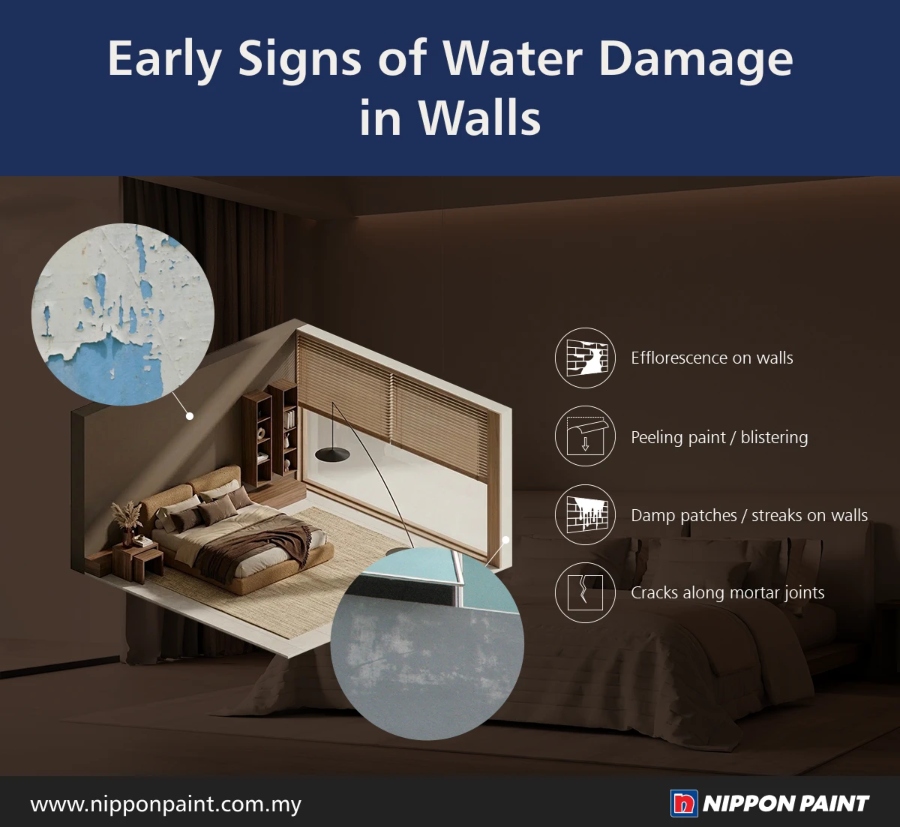
What to do in the first 24 hours of a ceiling leak:
- Identify the leak source
- Switch off nearby electrical points if necessary
- Contain the water immediately
- Document the damage
- Inform your neighbour or building management early
- Arrange for professional inspection
- Monitor the affected area over the next 24 hours
When a Small Leak Becomes a Bigger Problem
In high-rise buildings, units are physically interconnected. Bathrooms, kitchens, and balconies are stacked on top of one another, which means when something fails in one unit, the effects rarely stay contained.
Ceiling leaks are typically caused by failures in the unit above, often due to deteriorating waterproofing systems, plumbing defects, or long-term moisture seepage through concrete slabs. While it may appear minor at first, the impact can be far-reaching:
- Property value impact: Visible water damage can signal deeper structural or maintenance issues, affecting buyer confidence and resale value
- Health concerns: Persistent dampness creates conditions for mould and mildew, which may affect indoor air quality and respiratory health
- Rising repair costs: Water continues to spread within concealed layers, making future repairs more extensive and costly
- Neighbour disputes: When the source originates from another unit, it often leads to delays, disputes, and prolonged inconvenience
A building surveying expert, explains,
“Water ingress is rarely confined to one spot. Once it enters a structure, it moves through materials and continues to cause damage if the source is not resolved.”
The Real Issue Isn’t What You See
Ceiling leaks are often misunderstood because the visible damage is only a symptom. Water that has already entered the structure continues to move through concrete and internal layers, eventually resurfacing over time.
In Malaysia, waterproofing in wet areas is not optional. Under the Uniform Building By-Laws 1984, areas such as bathrooms, kitchens, and balconies must be constructed with proper waterproofing systems, including sealed floor slabs, protected joints, and adequate drainage design to prevent water from penetrating surrounding structures or lower units.
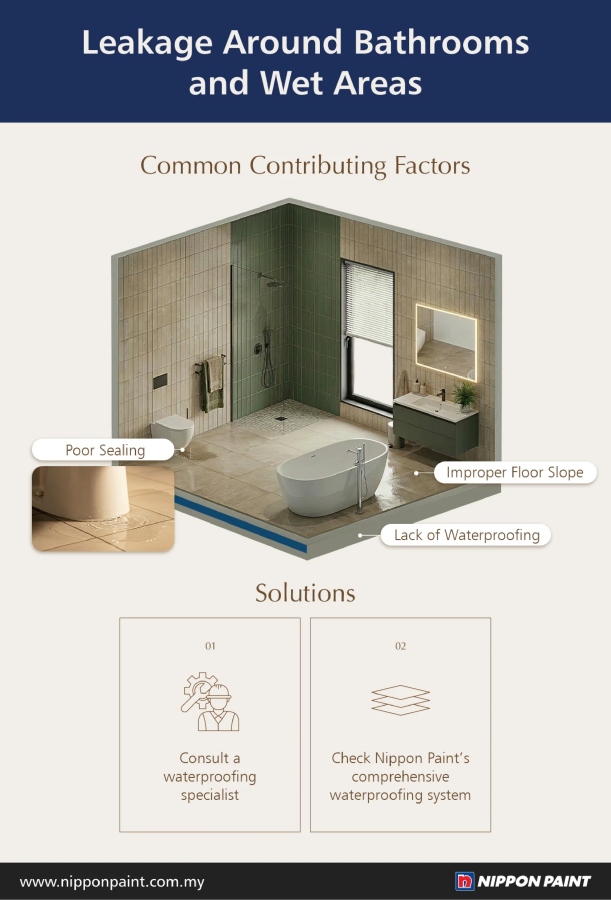
While regulations require buildings to be designed to prevent water ingress, experts note that failures often occur due to poor workmanship, ageing materials, or repairs that do not restore the original system.
Moving Beyond the Quick Fix Mindset
A ceiling leak is rarely caused by a single defect. It is usually the result of multiple failures across different layers within the building system. Addressing only the visible damage does not stop the source. Water will continue to travel through the structure and reappear over time.
As high-rise living becomes more common, there is a growing need to rethink how these issues are addressed. The priority should be to address the root cause rather than just the visible damage. Homeowners can consider the following:
- Identify and confirm the source of the leak: In most condominium cases, the issue originates from the unit above, particularly from wet areas such as bathrooms or balconies
- Engage your neighbour and building management early: Prompt coordination helps ensure the source is investigated and resolved before further damage spreads
- Seek a professional diagnosis: A building surveyor or waterproofing specialist can accurately identify the cause and recommend the appropriate repair approach
- Choose a reliable waterproofing system, not a quick fix: Effective repairs require compatible materials that work together as a complete system to stop water at its source and prevent recurrence
Mr Tay Sze Tuck, the General Manager of Nippon Paint Malaysia, shares:
“Ceiling leaks are often treated as isolated issues, but in reality, they are usually the result of a breakdown across multiple layers within the building. Addressing only what is visible will not stop the problem. The key is to resolve it at the source and ensure that waterproofing, substrate preparation, and all supporting layers work together as a complete system. Without that, the issue is likely to return.”
A Smarter Way Forward for Home Protection
For homeowners, protecting a home goes beyond aesthetics. It is about creating a space that remains safe, comfortable, and resilient over time, especially in high-rise environments where hidden issues can escalate quickly if left unresolved.
This reflects Nippon Paint’s vision of helping homeowners create their “Most Beautiful Home”, not just through beautiful finishes, but through complete protection and compatible solutions that work from bare to finish.
To support this, Nippon Paint’s Bare-to-Finish Solutions bring together compatible systems designed to address different layers of home protection, including waterproofing, surface preparation, and finishing solutions that work seamlessly together for longer-lasting performance.
Homeowners looking for trusted guidance, system solutions, and access to expert advice can explore the Bare-to-Finish offering here: https://www.nipponpaint.com.my/solutions/bare-to-finish/