
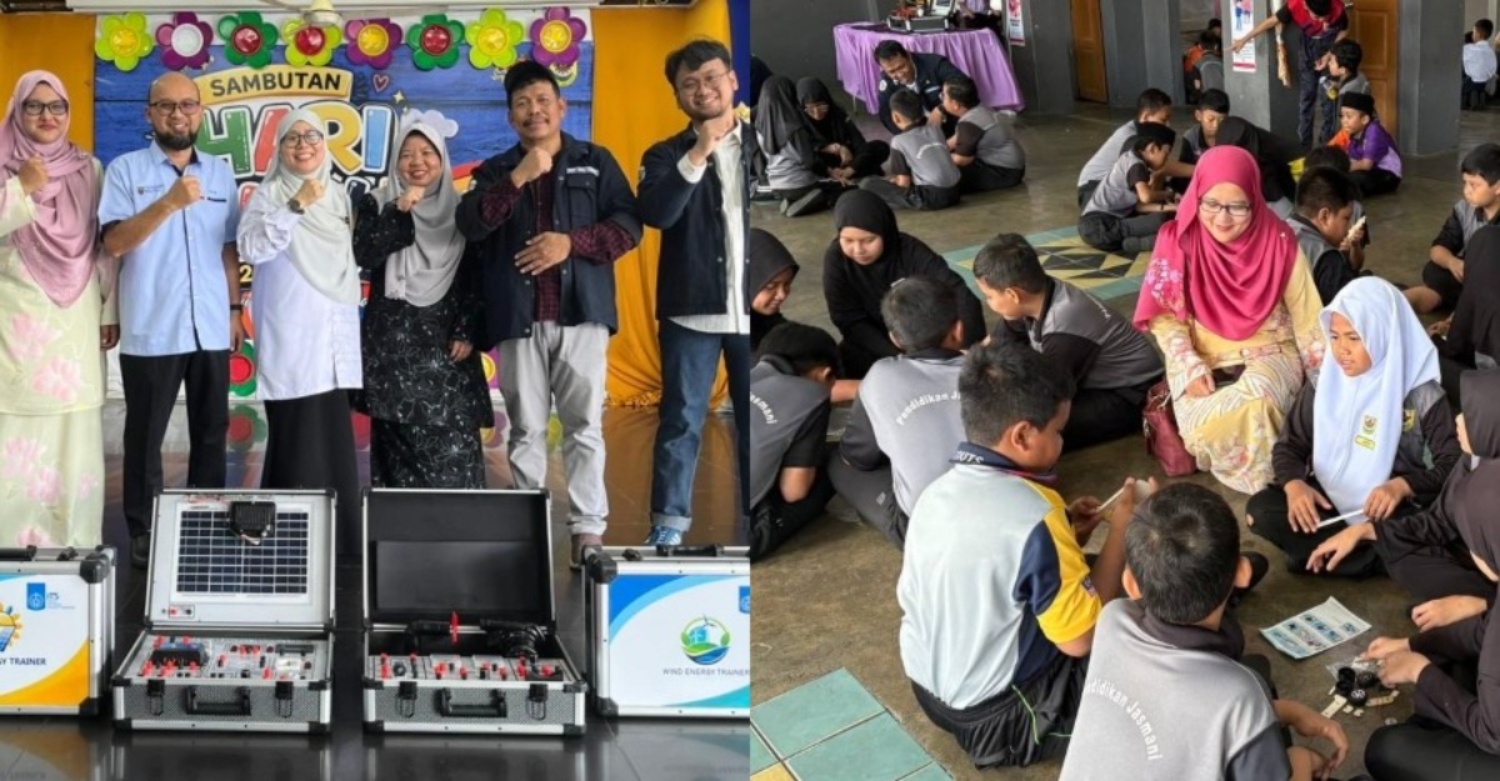
A group of Year Five pupils gathered around a solar-powered car kit placed before them. Some carefully held the wheels, others arranged the small components, while several enthusiastically discussed the most effective way to assemble the model. Occasional cheers could be heard as the completed solar car successfully moved forward, albeit only for a few metres.
Elsewhere, a group of female pupils listened attentively to a sharing session conducted by a female engineer, who introduced them to the field of engineering—a profession that many of them had previously encountered only through textbooks or television.
On 23 and 24 June, Sekolah Kebangsaan Taman Medan became the setting for a learning experience that differed significantly from conventional classroom instruction. Rather than relying solely on theoretical explanations, pupils were encouraged to explore, experiment, and acquire knowledge through hands-on experiences.
Through the STEM Awareness Programme: Electrical Energy Efficiency and Sustainability, the Department of Electrical Engineering, Faculty of Engineering, Universiti Malaya, introduced concepts of sustainable energy and engineering to primary school pupils in an engaging and accessible manner. Organised in conjunction with the International Women in Engineering Day, the programme was conducted in collaboration with the Institut Teknologi Sepuluh Nopember (ITS), Indonesia, as well as volunteers from several IEEE technical societies.
For many pupils, engineering may initially appear to be a highly specialised discipline taught exclusively at the university level. However, over the course of the two-day programme, this perception gradually evolved. Concepts such as solar energy, wind turbines, and energy efficiency were translated into practical activities that were easy to understand, enjoyable, and closely connected to the pupils’ everyday lives.
The first day of the programme focused specifically on Year Six female pupils through an inspirational session held in conjunction with the International Women in Engineering Day. Rather than merely introducing STEM-related career opportunities, the session provided participants with the opportunity to engage directly with women actively pursuing professional careers in engineering.
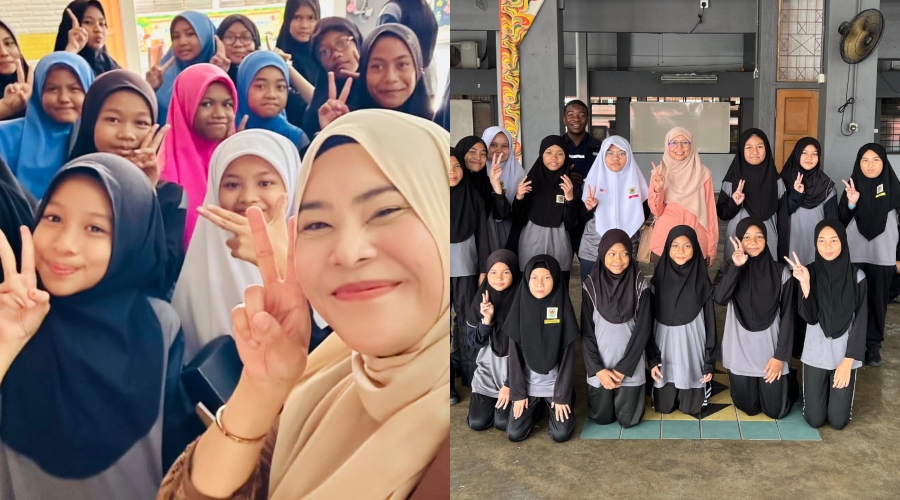
According to Dr. Nurulafiqah Nadzirah Mansor from the Department of Electrical Engineering, Universiti Malaya, who also serves as Chair of Women in Power, IEEE Power & Energy Society Malaysia, early exposure to engineering is essential in fostering confidence among young female students by demonstrating that the profession is open to everyone.
“We want them to realise that engineering is not an exclusive field for men. When pupils have the opportunity to meet and speak with women who are actively working in this profession, they begin to recognise that such aspirations are equally attainable for them.”
The informal interaction created an environment in which pupils felt comfortable asking questions regarding the life of an engineer, the challenges of engineering education, and future career opportunities. Beyond serving as a motivational session, the engagement encouraged pupils to envision themselves pursuing careers in a field that may previously have seemed distant or inaccessible.
Meanwhile, another group of Universiti Malaya volunteers conducted community service activities to upgrade the school’s electrical wiring and improve several designated facilities. Although these efforts were carried out behind the scenes, they are expected to provide long-term benefits by creating a safer and more conducive learning environment for the school community.
The second day of the programme featured a more dynamic atmosphere as Year Five pupils participated in demonstrations involving solar energy and wind turbine kits before undertaking the challenge of constructing their own solar-powered vehicle models.
It was during these activities that meaningful learning took place. Rather than passively listening to explanations about renewable energy, pupils were required to assemble components, test their designs, identify errors, and collaboratively develop solutions with their teammates. While some models operated successfully on the first attempt, others required repeated disassembly and reassembly before achieving the desired outcome.
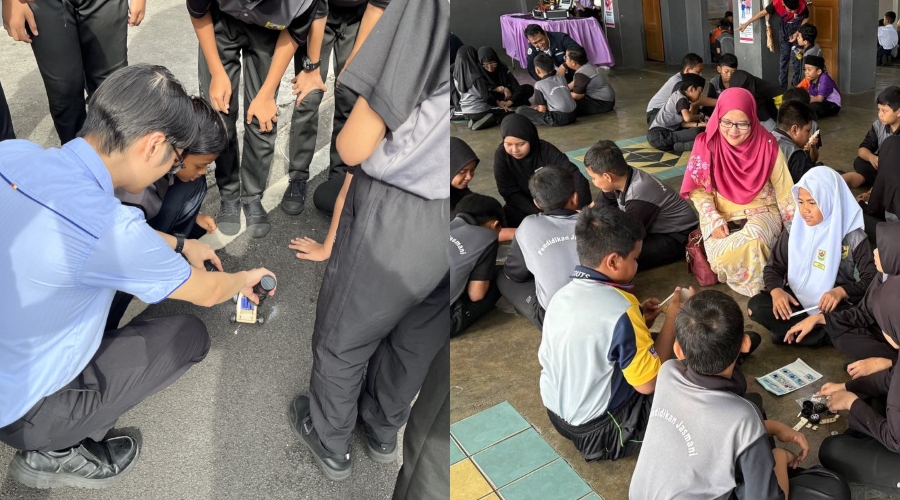
Without necessarily realising it, the pupils were applying the fundamental principles of engineering—observing, experimenting, evaluating, and continuously improving their designs.
Such an experiential learning approach enables pupils to appreciate that engineering extends beyond theoretical concepts presented in textbooks. Instead, it represents a systematic process of solving real-world problems through creativity, collaboration, and perseverance.
The active involvement of academic staff and undergraduate students from Universiti Malaya, together with students from Institut Teknologi Sepuluh Nopember, Indonesia, added an international dimension to the programme. Their roles extended beyond facilitation, as they also served as mentors who guided and supported pupils throughout the learning activities.
For the university students themselves, engaging with primary school pupils provided a valuable learning experience. In addition to sharing their technical knowledge, they further developed essential transferable skills, including communication, leadership, teamwork, and cross-cultural collaboration.
According to the Headmaster of Sekolah Kebangsaan Taman Medan, Mr. Khairul Nizal Abu Bakar, programmes of this nature enrich pupils’ educational experiences by allowing them to observe how classroom knowledge can be applied in authentic contexts.
“Exposure to programmes such as this enables pupils to view STEM from a more engaging perspective. They not only learn theoretical concepts but also experience firsthand how scientific knowledge can be applied to solve problems and develop innovative solutions.”
The programme also received support from the IEEE Power & Energy Society Malaysia Chapter, IEEE Women in Engineering, and the IEEE Dielectrics and Electrical Insulation Society, all of which contributed to the successful implementation of the various activities conducted over the two-day programme.
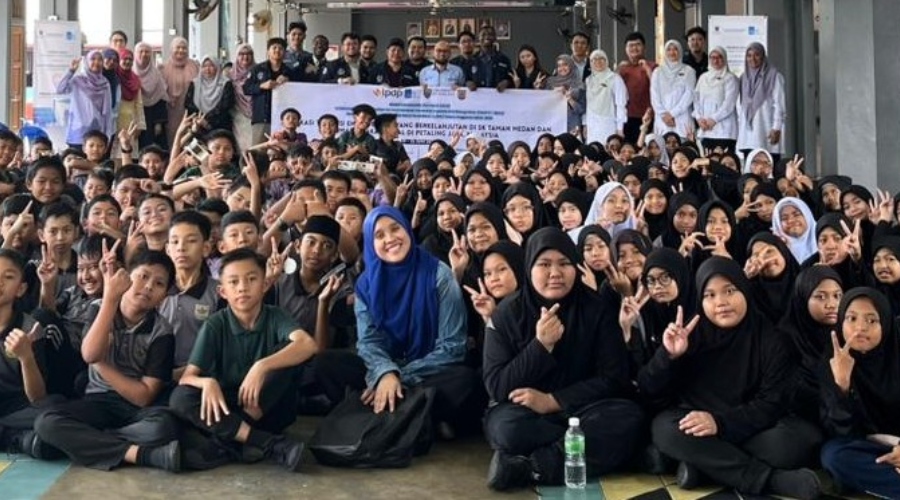
As Malaysia continues its efforts to cultivate a larger pool of talent in STEM-related disciplines, initiatives such as this demonstrate that an interest in science and engineering does not necessarily begin in university laboratories. Instead, it may begin in a primary school classroom, with a group of pupils collaborating as a team and witnessing a small solar-powered vehicle move forward through their own creativity and innovation.
Ultimately, before an individual can become an engineer, they must first be given the opportunity to experience the excitement and fulfilment of becoming a creator.