Few ingredients feel as naturally at home in Southeast Asia as the coconut. In Malaysia, it is woven into everyday life, from the creamy santan in nasi lemak and rendang to grated coconut in traditional kuih, refreshing coconut water on a hot day, and increasingly, coconut-derived ingredients in wellness and personal care products.
The growing demand for natural and plant-based products is reshaping the global coconut industry. The Virgin Coconut Oil (VCO) market is expected to grow at a CAGR of around 9.4% through 2029, driven by demand for organic, natural, and wellness products. Closer to home, Malaysia imported more than 661 tonnes of coconuts from countries including Indonesia in early 2025, reflecting the close ties within Southeast Asia’s coconut supply chain. Yet beyond market growth lies a broader question: how can communities unlock new possibilities from a resource cultivated for generations?
One example can be found in Solol Village, Raja Ampat, Indonesia, where a coastal community is transforming coconuts from an underutilised resource into higher-value products.
When Coconut Becomes a Pathway to a Restorative Economy
Solol Village is located in West Salawati District, Raja Ampat Regency, Indonesia, where generations of families have maintained small coconut groves around homes, beaches and mangrove areas. However, much of their economic potential remained untapped, with coconuts mainly used for daily consumption or sold as raw produce.
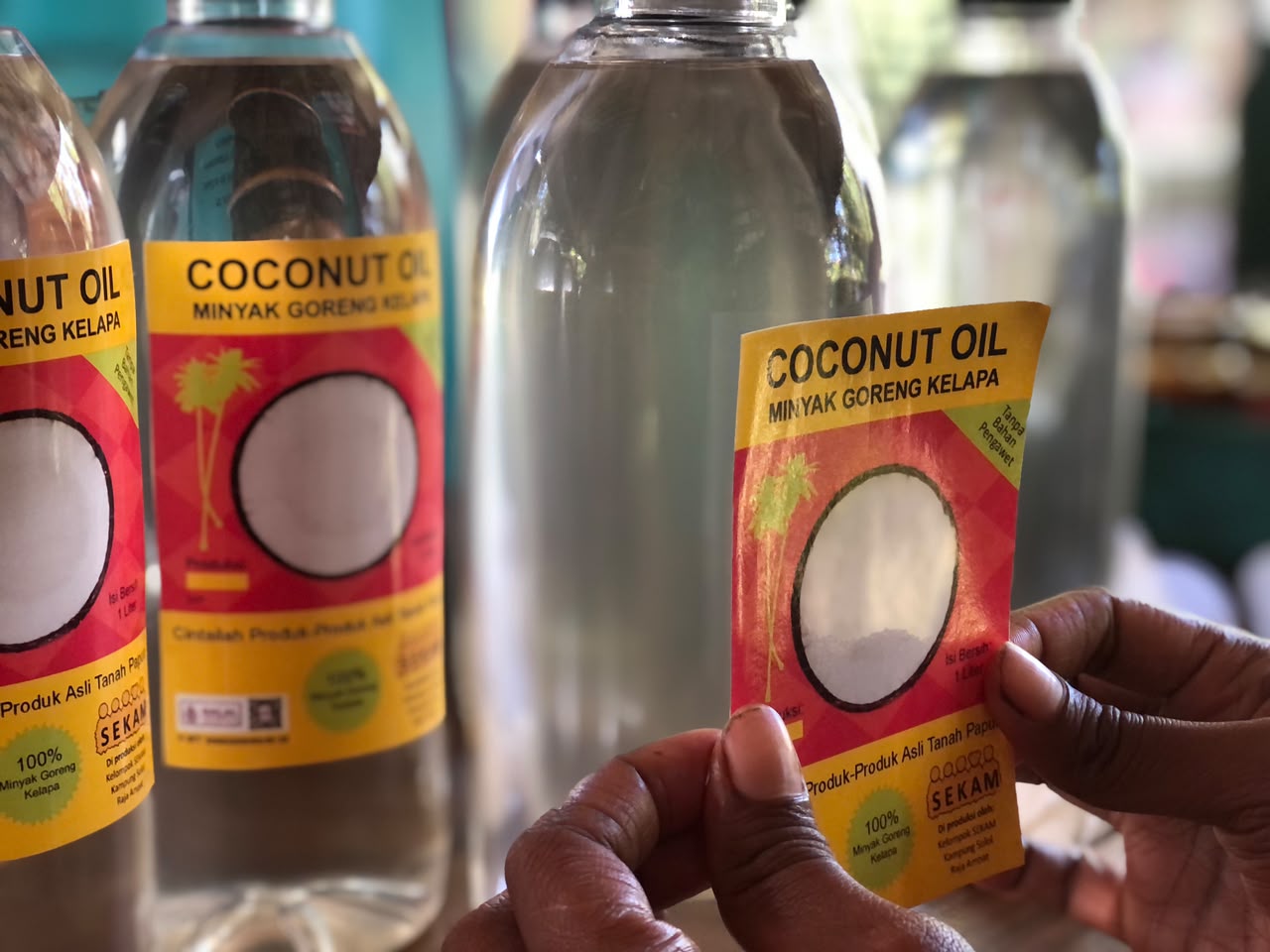
“In the past, we only made regular coconut oil. We grated it manually, squeezed it, and then cooked it. There was no thought about quality, let alone the market,” said Philipus Charles Fiataly, a village official and chairman of the Church Youth Fellowship (PAM), who is now actively involved in VCO production.
The community also faced challenges in maintaining their coconut resources. Raw coconuts were typically sold for just Rp1,000 to Rp3,000 (RM0.23 to RM0.70) per fruit depending on market conditions, while harvesting practices and limited replanting posed longer-term challenges for sustaining the resource.
“If we keep moving and do not replant, eventually the potential could run out. Therefore, we need to find a way so that cultivation continues without damaging the environment,” he said.
This became the starting point for a new approach, one that sought to create economic opportunities while preserving the natural resources that communities depend on. Philip and his friends later joined the Merdesa Village School (SEKAM), a Bentara Papua programme that equipped them with skills in VCO production, natural resource management and product development.
From Traditional Oil to Higher-Value Products
Following a potential assessment in Raja Ampat in 2019, Bentara Papua established the Solol Station as a learning hub to help residents develop local resources, including coconuts.
“We start with what is already there. The coconuts are already present; it is just a matter of how to process them so they have added value and quality acceptable to the market,” said Grison Krey, the Solol Station Coordinator for Bentara Papua.
For Philip, the learning process changed how the community viewed its own resources. “Since Bentara Papua has been here, that is when we learned about VCO. From knowing nothing at all to understanding and being able to make it ourselves, we were also involved in the experimentation process and creating SOPs for VCO production,” Philip added.
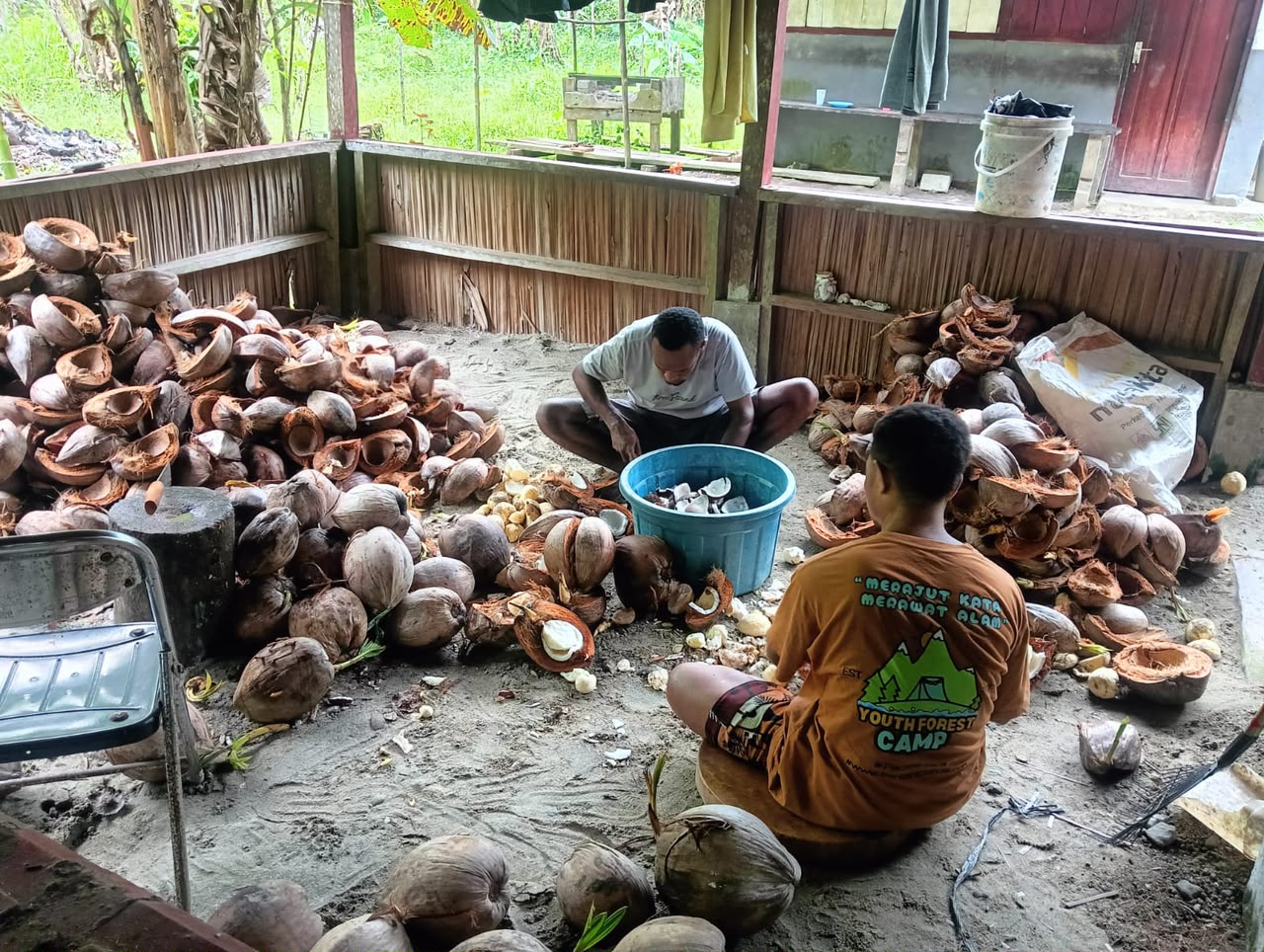
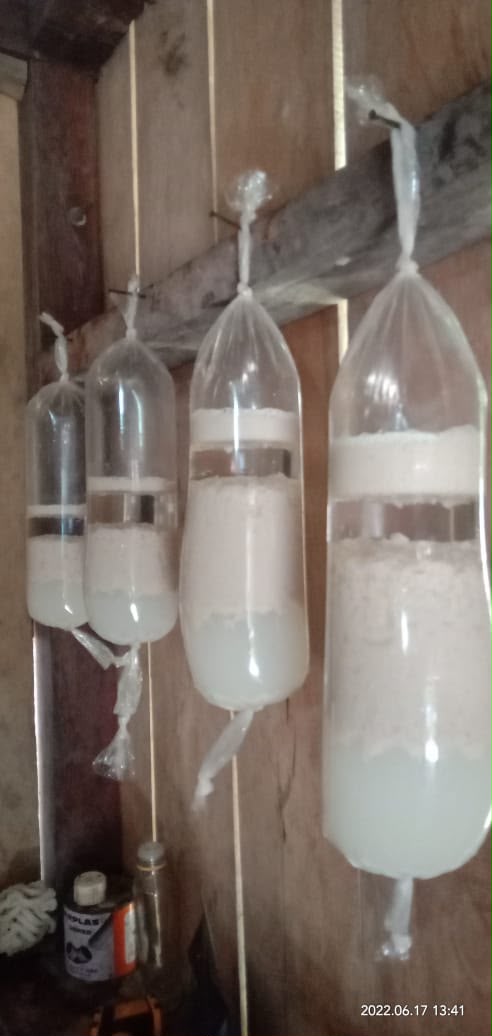
Today, the community produces VCO collectively, using around 10 to 30 carefully selected coconuts per production cycle, which are carefully selected based on maturity before undergoing processing through grating, squeezing, fermentation, and filtration.
“If the coconut is too old, the smell is stronger. We do not use that for VCO. We truly try to maintain quality through traditional techniques so the quality remains clear for our customers,” Philip explained.
The Ripple Effect of a Coconut Transformation
Through VCO production, coconuts in Solol are no longer valued only as raw materials. In Solol, VCO sells for approximately Rp40,000 (RM 9.80) per 100 ml and Rp100,000 (RM23.20) per 250 ml, compared with Rp25,000 to Rp30,000 (RM5.80 to RM6.96) for regular coconut oil. The products have also reached customers through district exhibitions, resort networks and international visitors from countries including the United States, Norway, Brazil, Germany and Japan.
However, building a sustainable market remains a challenge. As an island community, Solol continues to navigate logistical limitations, with weather conditions and transportation affecting the ability to deliver products consistently.
“There was a diving resort that once took all the stock. They asked the youth for a routine monthly supply, but the obstacle is logistics, including weather. However, we ensure that production remains according to the community’s capacity without sacrificing the quality of the SEKAM youth’s products,” said Grison.
Beyond VCO production, the community is also finding value in coconut by-products, with shells transformed into decorative products, husks used for smoking fish, and VCO residue being explored for animal feed and briquettes.
For Philip, the goal is to create livelihoods while protecting the environment. “These coconuts are a legacy from our parents. We guard them, we plant them again, and we process them slowly,” he said.
Solol’s experience shows that a restorative economy can start with something as ordinary as a coconut. When traditional knowledge meets skills development, market access, and environmental stewardship, a humble resource can support stronger livelihoods and preserve community heritage.