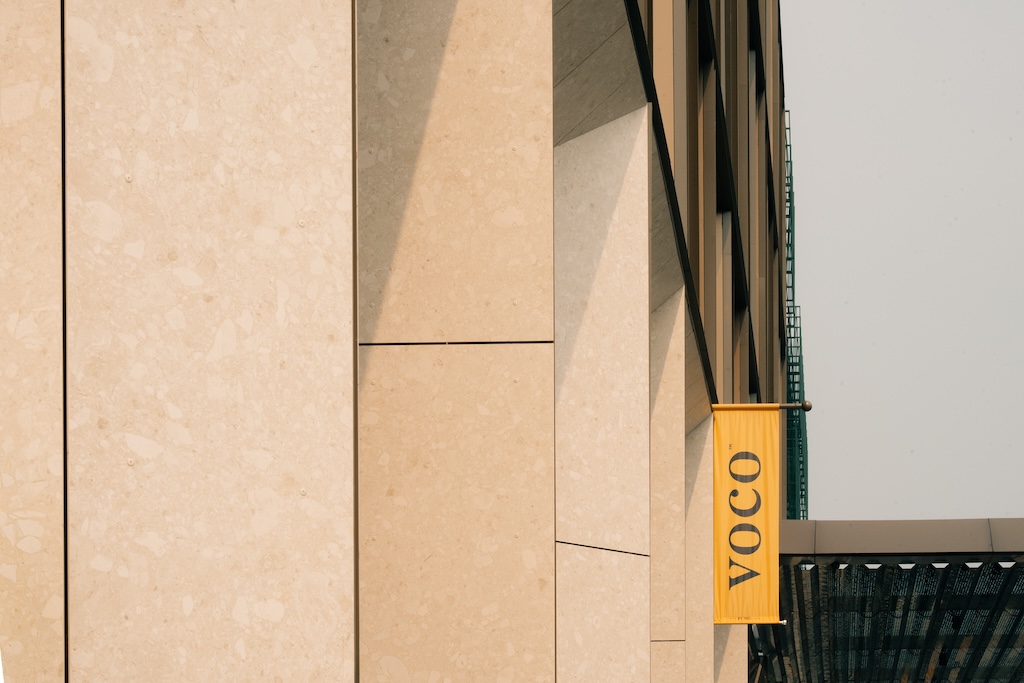
What do you do with a 17-year-old building that has already become part of Kuching’s landscape?
For voco Kuching by IHG, the answer wasn’t simply to give it a fresh coat of paint.
Instead, the team behind its transformation wanted to give the familiar landmark a completely new identity, while making sure the building could stand the test of time.
According to Dato Bobby Ting, Managing Director of Elica, the goal was never to simply “dress up” the existing building.
“We wanted this building to withstand the next few generations,” he said.
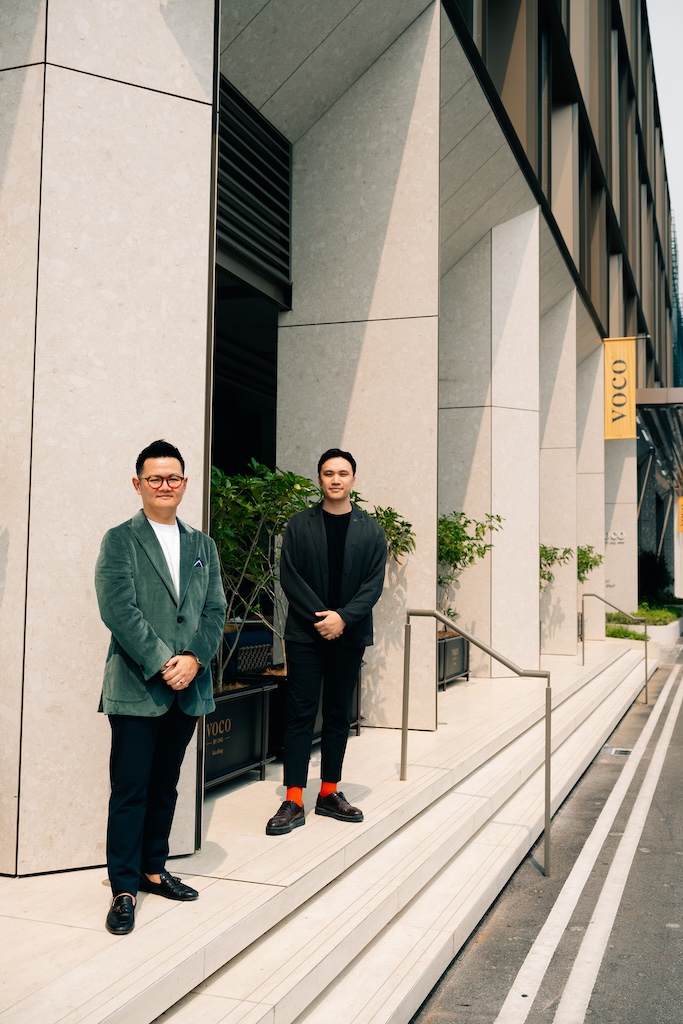
At the heart of the transformation is a brand-new façade designed by One Design Office Asia, formerly known as Neuman Studio.
The design takes inspiration from Kuching’s traditional five-foot ways, creating a new colonnade that provides a welcoming and shaded transition between the RH commercial area and the hotel.
The team also wanted the building to have a stronger, more distinctive presence without losing its warmth.
“We envisioned a strong stone like plinth that would give the arrival a sense of grandeur, solidity and permanence,” said Neuman Chow of One Design Office Asia.
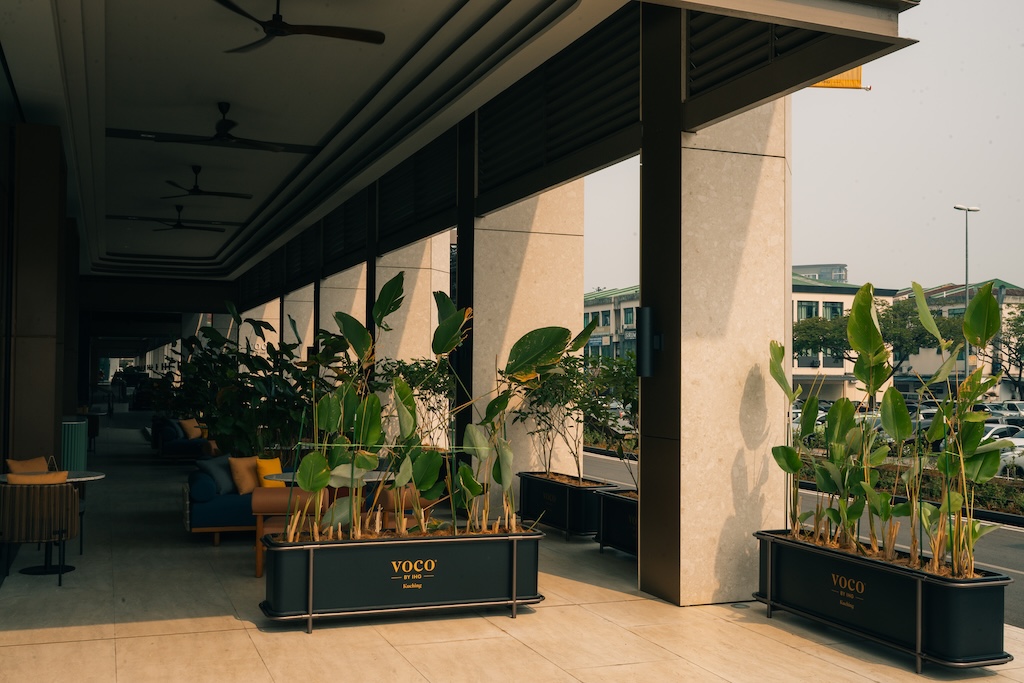
But making the façade look good was only half the challenge.
Since the building is a working hotel, the materials also needed to cope with heavy daily use, maintenance requirements and Kuching’s tropical climate.
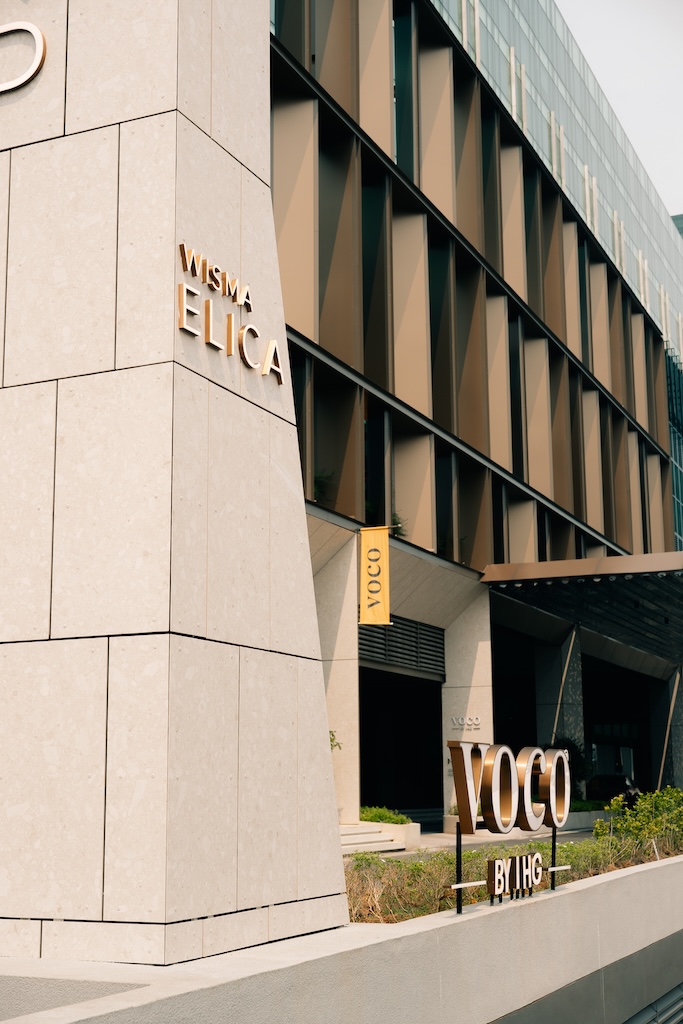
That led the team to Dekton Ava by Cosentino, an engineered surface chosen to bring together the appearance of natural stone with the durability needed for an outdoor façade.
Its colour and texture complement the building’s existing green-tinted glazing, while its large-format slabs work with the proportions of the original architecture.
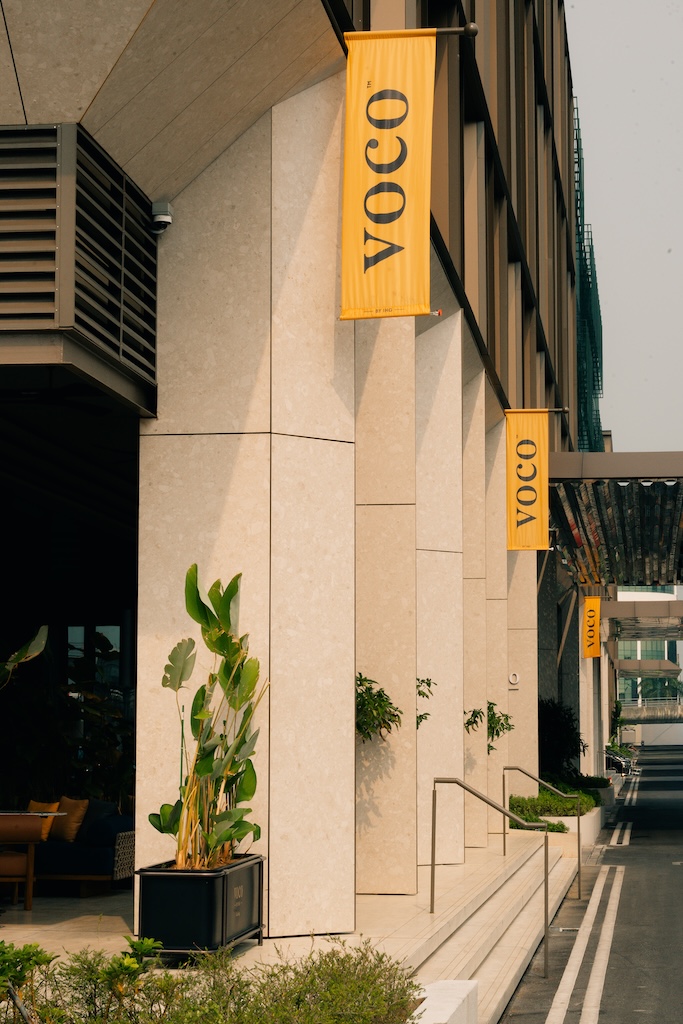
The material’s relatively lightweight 8mm slab profile also helped make the new façade more practical from a structural and construction perspective.
For a building that needs to look good not just on opening day but years down the road, longevity was a key consideration.
The façade was designed to withstand temperature changes, UV exposure and everyday wear, important factors for a building in Kuching’s tropical climate.
For Dato Bobby, the transformation is ultimately about more than architecture.
Many people in Kuching already knew the building from its previous life, making its revival particularly meaningful.
“To see it completely reimagined and active again is very satisfying,” he said.
“It has become more than just a renovation, it feels like we’ve given an important building in the city a new chapter.”
And perhaps that is what makes the new voco Kuching stand out: rather than erasing its past, the redesign builds on what was already there and gives the familiar landmark a new identity designed to last.