
NEGERI SEMBILAN, 2 November 2026 – Google is investing US$160 million in shared water infrastructure in Negeri Sembilan to support local communities and its upcoming data centre operations in the state.
The announcement also includes new education and workforce development initiatives to prepare local youth for careers in Malaysia’s clean energy sector.
New Water Infrastructure To Strengthen Supply
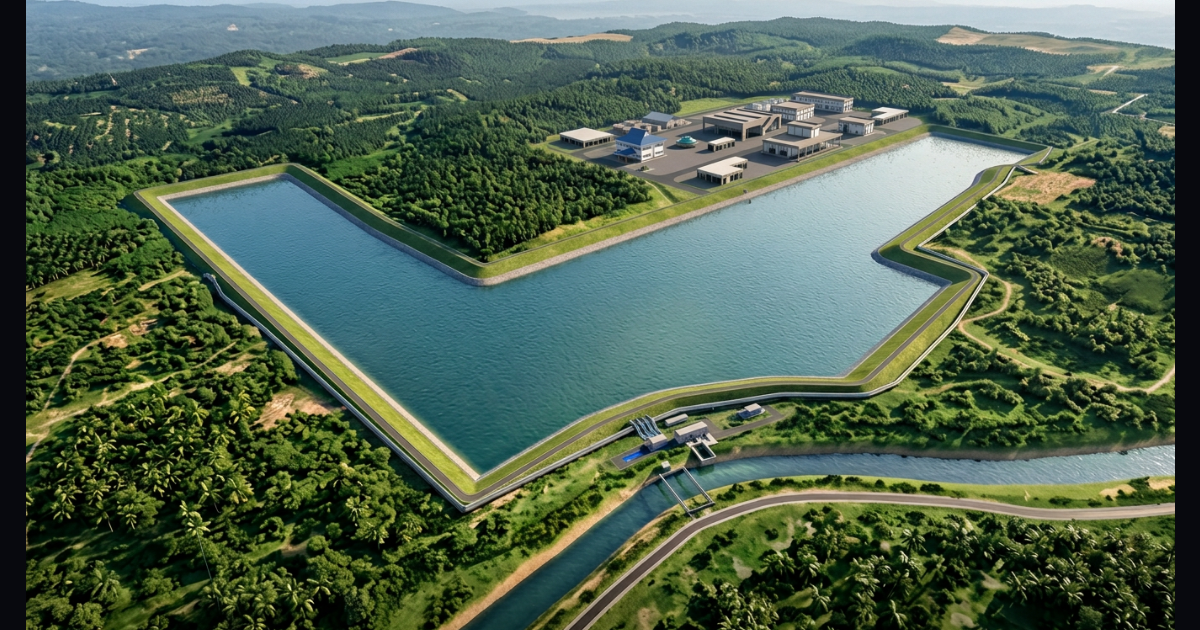
Working with the Negeri Sembilan State Government and Syarikat Air Negeri Sembilan Sdn Bhd (SAINS), Google has appointed Gamuda Berhad to build an off-river storage reservoir and water treatment plant.
Once completed, the facilities will be owned by Menteri Besar Negeri Sembilan (Incorporated), or MBINS, a statutory body managing state assets.
The treatment plant will have the capacity to supply 65 million litres of potable water daily, serving Google’s upcoming data centre campus at Springhill Industrial Park, Port Dickson, while increasing water availability for public use.
Located along the Linggi River, the reservoir will capture excess river water and rainfall, particularly during high-yield seasons, to help reduce flood risks in surrounding areas. The stored water will be treated for domestic and commercial use, while reserves can help maintain supply during periods of lower water yield.
Supporting Google’s Data Centre Development
Google’s Negeri Sembilan development includes its upcoming data centre campus, shared water infrastructure and local workforce programmes.
The company also confirmed it will pay for 100% of the electricity consumed by its data centre, as well as the direct infrastructure costs needed to connect it to the grid, in compliance with local regulations.
Designed to be among the world’s most energy-efficient facilities, the Port Dickson campus will support Google services such as Search, Maps and Chrome, which are used by millions across Malaysia.
Dato’ Haji Najmuddin Sharif bin Sarimon, Chief Executive Officer of Invest Negeri Sembilan, described the development as an important milestone in attracting high-value digital infrastructure investment.
He highlighted its potential to strengthen the state’s digital economy through infrastructure improvements, employment opportunities and a more skilled workforce.
Meanwhile, Drew Byrnes, Director and Head of Global Infrastructure and Energy, Asia Pacific, Google, said the investment reflects the company’s ambition to replenish 120% of the freshwater volume it consumes globally.
He added that Google aims to pair its infrastructure development with water replenishment, power improvements and training opportunities for local communities.
Preparing Youth For Clean Energy Careers
Google is also expanding its collaboration with SOLS Foundation through two initiatives to help young Malaysians pursue careers in the clean energy sector.
The programmes complement Google’s partnerships with Shizen Energy-Solarvest and TotalEnergies, which aim to add new clean power to Malaysia’s National Grid through Power Purchase Agreements (PPAs). These agreements help energy developers secure financing for new clean energy facilities, including large-scale solar farms.
The two initiatives with SOLS Foundation are:
1. Solar Explorers and Solar Futures
Participating public schools will receive a Solar and Energy Lab equipped with a 2.56-kilowatt-peak solar array and 5.4 kilowatt-hours of battery storage.
Teachers will be trained to incorporate the facilities into lessons and co-curricular activities. Primary students will learn about solar technology and energy-saving habits, while secondary students will explore clean energy careers and relevant training pathways.
The installations will also generate electricity to help schools reduce energy costs and provide backup power during outages.
2. Digital Skills for the Renewable Energy Workforce
Google is funding a specialised 36-hour training programme that will become a permanent part of the SOLS Solar Academy.
The academy prepares youth from lower-income backgrounds and Indigenous communities for skilled jobs such as solar photovoltaic installation, electric vehicle charging station maintenance and energy system operations, with job placement upon graduation.
The new programme will equip participants with digital skills for tasks including solar system sizing, load calculations, inverter and grid performance monitoring, and field reporting.
Both initiatives are expected to roll out in Negeri Sembilan in early 2027, combining school-level education with industry-focused training to support Malaysia’s clean energy transition.