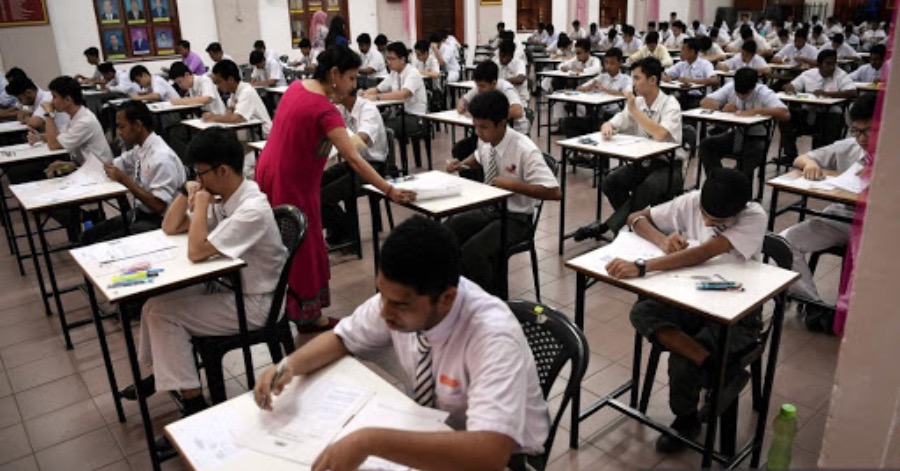
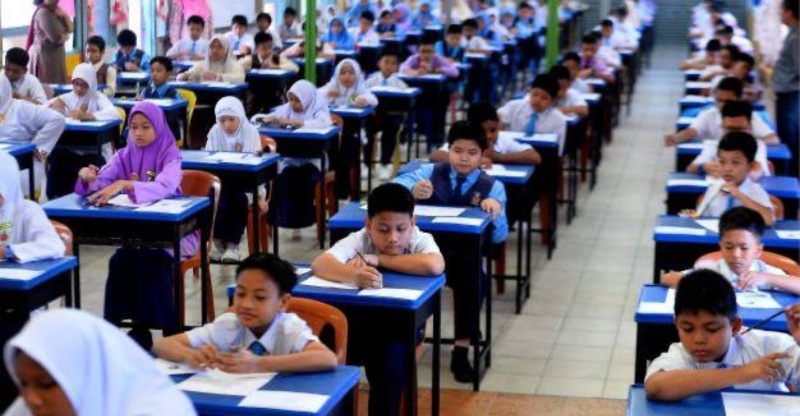
Okay, so everyone’s talking about exams again. And no, it’s not because we’re all secretly obsessed with bubble sheets and number two pencils.
We’re circling back to this debate because we’re genuinely trying to figure out how to fix education without turning schools into stress factories. The big question? How do we keep standards high while still being, you know, human about it?
The Great Exam Shake-Up
If you blink, you might miss how fast things have changed.
UPSR got the boot in 2021. PT3? First canceled because of COVID, then officially shown the door in 2022.
For a while, it was all about school-based assessment. But guess what? Parents started asking for exams back.
So now, the Ministry is doing that thing where they review everything, and whatever they decide will eventually land on the Cabinet’s desk.
Here’s the thing though, exams aren’t just about testing.
They’re basically society’s report card. Families check them, universities judge them, employers scan them.
And when standards start slipping, we all start looking for something solid to hold onto.
That’s where exams come back into the conversation.
The Numbers Don’t Lie (And They’re Not Pretty)
We’ve got a measuring problem in Malaysia. And no, we’re not talking about BMI.
Our 15-year-olds scored 409 in math, 388 in reading, and 416 in science on PISA 2022.
All below the OECD average. That’s basically a wake-up call in neon lights.
Whether we bring exams back or keep them gone, we need to think carefully because whatever we decide affects how our kids actually learn.
But here’s the plot twist: SPM? Still standing strong.
In 2023, over 373,000 students sat for it, and 93.5% walked away with their certs.
Best results since 2013, actually. Pretty impressive considering these kids had their learning interrupted by a whole pandemic.
But these numbers also raise two major questions: where’s the real learning gap hiding, and how do we actually find it?
The Science Bit (But Make It Interesting)
International research says something pretty useful: assessments only help learning when they actually feed back into teaching.
A crew from King’s College London found that ongoing, in-class assessments can boost grades because they catch problems early.
But if everything hinges on one big exam? Sure, results might look good, but the learning itself gets kinda uneven.
In theory, Malaysia’s school-based assessment system gets this.
The Ministry keeps saying it’s our way out of exam culture and toward holistic development. Sounds great on paper.
But in reality? Teachers are drowning.
They need more time, clearer standards, and actual training to pull this off.
Without that, we end up with inconsistent standards across schools and teachers buried in paperwork instead of actually teaching.
So, what’s the move?
Glad you asked. Here’s the rational game plan:
First, keep exams but make them smart.
Well-designed centralized tests, but not too many.
Everyone needs to understand why they’re happening.
SPM stays as our national benchmark. If we bring back lower-level exams, use them diagnostically, to figure out which kids need help, not just to rank them.
Second, make school-based assessment actually trustworthy.
Worried about inconsistency? Schools need to show their work, literally.
Share student examples at different levels, strengthen moderation between schools. Make sure an A at School A means the same thing at School B.
Third, stop drowning teachers in admin. If their desks are covered in paperwork, they can’t do meaningful assessments. Invest in training. Make digital tools work for them, not against them.
Finally, measure what actually matters. Critical thinking? Communication? Creativity? You can’t always test these with multiple choice. Design assessments that capture the real skills, not just who can memorize fastest.
Whenever this debate pops up, everyone wants to pick a side: bring back UPSR/PT3 or abolish them forever.
Honestly? That’s not the smart fight. The real question is whether we can build an assessment system that’s both reliable and useful.
One that actually guides teaching, protects student well-being, AND reassures everyone that standards mean something.
Get the design right; clear, fair, smart, and exams stop being the villain. They just become another tool helping our kids actually learn.