Do you ever stop and think about how Michelin restaurant stars actually work? Or where the idea even came from in the first place?
Here’s the twist: the world’s most prestigious restaurant award didn’t start in the food industry at all. It started with tyres.
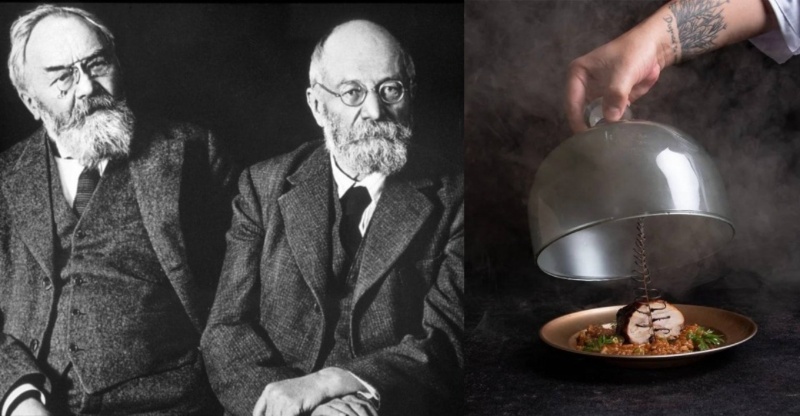
In the late 1800s, the founders of Michelin, brothers André Michelin and Édouard Michelin, were trying to solve a simple business problem.
At the time, there were only a few thousand cars on the roads in France, which meant very few people were buying tyres.
So the brothers came up with a clever plan: if they could get people to drive more, tyre sales would naturally increase.
A Travel Guide That Changed Food Culture
In 1900, Michelin launched the first edition of the Michelin Guide. But it wasn’t the glamorous food guide we know today. Instead, it was a practical handbook designed for early motorists.
The guide included road maps, petrol stations, mechanics, hotels and restaurants, everything drivers needed to travel further and more often. Michelin even gave it away for free, hoping it would encourage people to take longer road trips. More driving meant more tyre wear. And more tyre wear meant more tyre sales.
It was marketing genius.
How Michelin invented restaurant stars to sell more tyres
— Science girl (@sciencegirl) March 12, 2026
When Restaurants Became the Main Event
As road travel grew, something unexpected happened: readers became increasingly interested in the restaurant recommendations inside the guide.
By the 1920s, dining spots listed in the guide were gaining attention. Seeing this opportunity, Michelin began highlighting exceptional restaurants with a star system in 1926.
A few years later, the company introduced the now-famous three-star rating scale that still defines fine dining today:
- One star: A very good restaurant
- Two stars: Excellent cooking, worth a detour
- Three stars: Exceptional cuisine, worth a special journey
Look closely at the wording and you’ll notice something clever. The ratings aren’t just about the food; they’re also about how far someone might travel to experience it.
From Clever Marketing to Culinary Legend
What started as a strategy to encourage road travel slowly evolved into one of the most respected authorities in global dining.
Today, the Michelin Guide sends anonymous inspectors around the world to review restaurants, and earning even a single star can transform a chef’s career overnight.
For chefs, it’s often seen as the culinary equivalent of winning an Oscar. For diners, it’s a signal that the experience will be unforgettable.
And it all began with a tyre company trying to get people to hit the road.
More than a century later, the strategy still works. Food lovers travel across cities, countries and continents in search of starred restaurants and every journey traces back to that simple idea from Michelin: if people drive more, they’ll need more tyres.
Brilliant, isn’t it?
Source: Elcielo Restaurant