
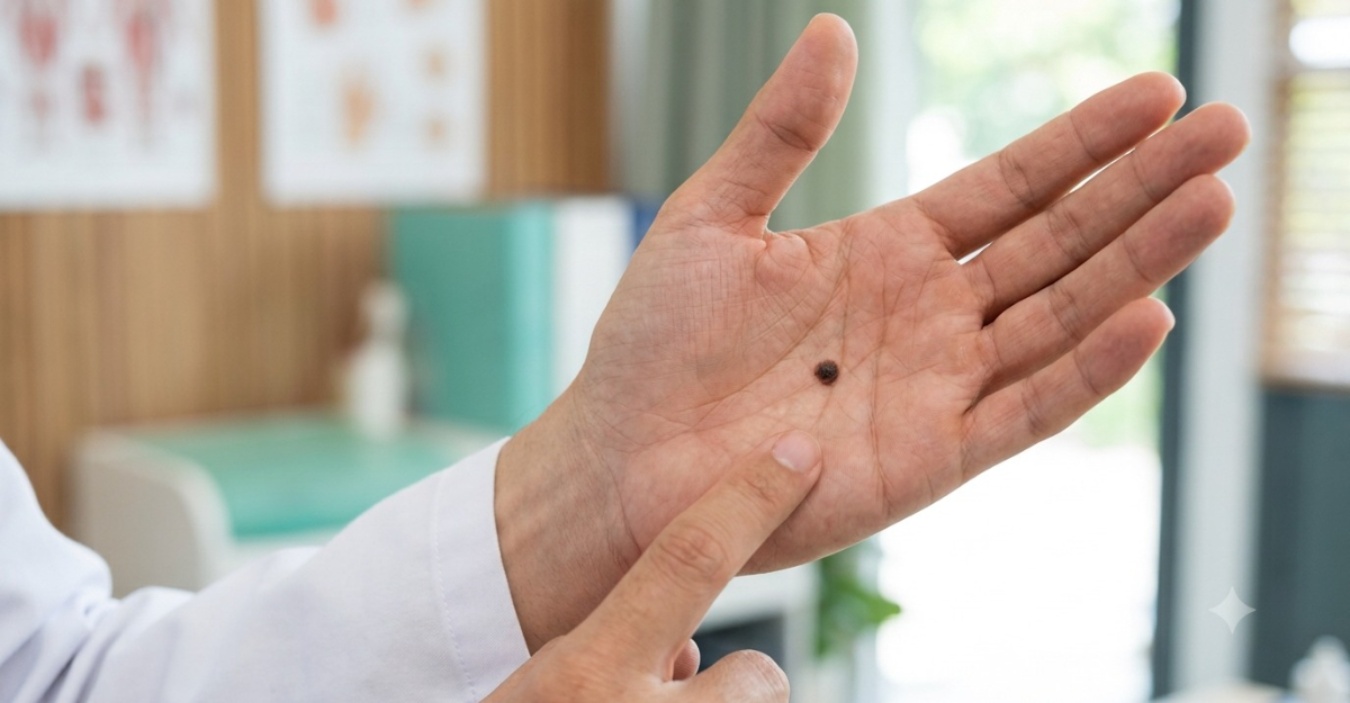
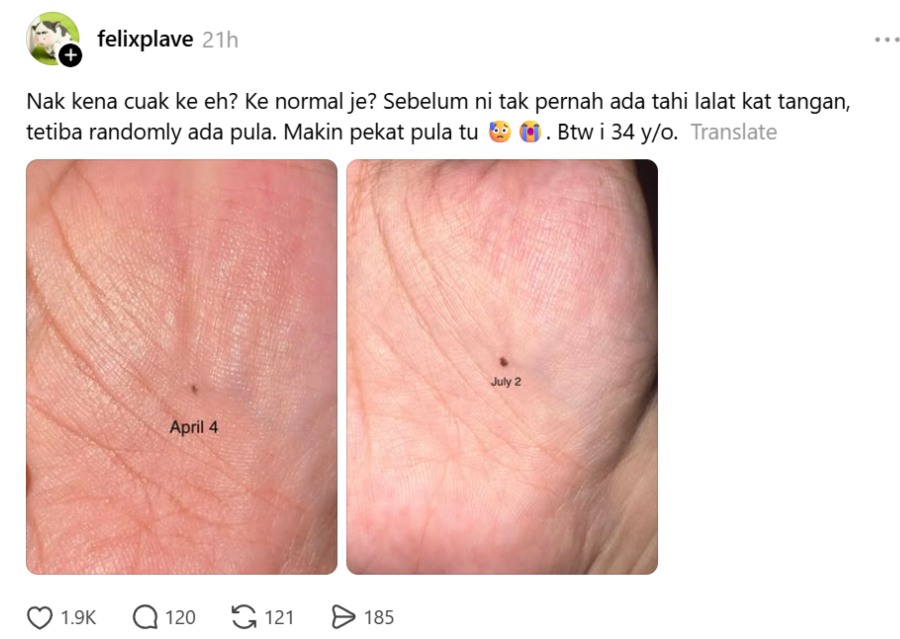
A photo of a tiny new mole on someone’s palm recently went viral on social media, with many users urging the person to get it checked for melanoma. The comments quickly sparked concern, leaving many people wondering: Should you be worried if a new mole suddenly appears?
While it’s natural to feel anxious after reading hundreds of alarming comments online, health experts say that most moles are harmless. However, it’s still important to pay attention if a mole appears suddenly in adulthood or starts changing in size, shape, or colour.
What Is Melanoma?
Melanoma is a type of skin cancer that develops in melanocytes, the cells responsible for producing melanin, the pigment that gives skin its colour. Although it commonly appears on sun exposed areas such as the face, arms, back, and legs, melanoma can also develop on the palms, soles of the feet, under the nails, and, in rare cases, inside the body.
According to the Mayo Clinic, most melanomas are linked to ultraviolet (UV) exposure from the sun or tanning beds. While anyone can develop melanoma, early detection greatly improves the chances of successful treatment.
The ABCDE Rule: Signs to Watch For
Doctors often use the ABCDE rule to identify moles that may require further examination:
A – Asymmetry: One half of the mole doesn’t match the other.
B – Border: The edges are irregular, blurred, or uneven.
C – Colour: The mole has multiple colours or uneven shades of brown, black, pink, red, white, or blue.
D – Diameter: The mole is larger than 6 mm (about the size of a pencil eraser), although melanomas can sometimes be smaller.
E – Evolving: The mole changes in size, shape, colour, or develops symptoms such as itching, crusting, or bleeding.
Moles on the palms, soles, or under the nails are less common, so any new or changing spot in these areas should be assessed by a healthcare professional.
Should You Be Concerned?
Not necessarily. New moles can develop due to ageing, genetics, or hormonal changes, and most are benign.
However, if a mole changes noticeably, bleeds, becomes painful, or looks different from your other moles, it’s a good idea to consult a doctor or dermatologist for an evaluation.
Viral social media posts can help raise awareness about skin health, but they shouldn’t be used to diagnose medical conditions. If you’re ever unsure about a new or changing mole, seeking professional medical advice is the safest course of action.
Source: Mayo Clinic, The Skin Cancer Foundation
Disclaimer: This article is for informational purposes only and should not be considered medical advice. Always consult a qualified healthcare professional for diagnosis or treatment of any health concerns.