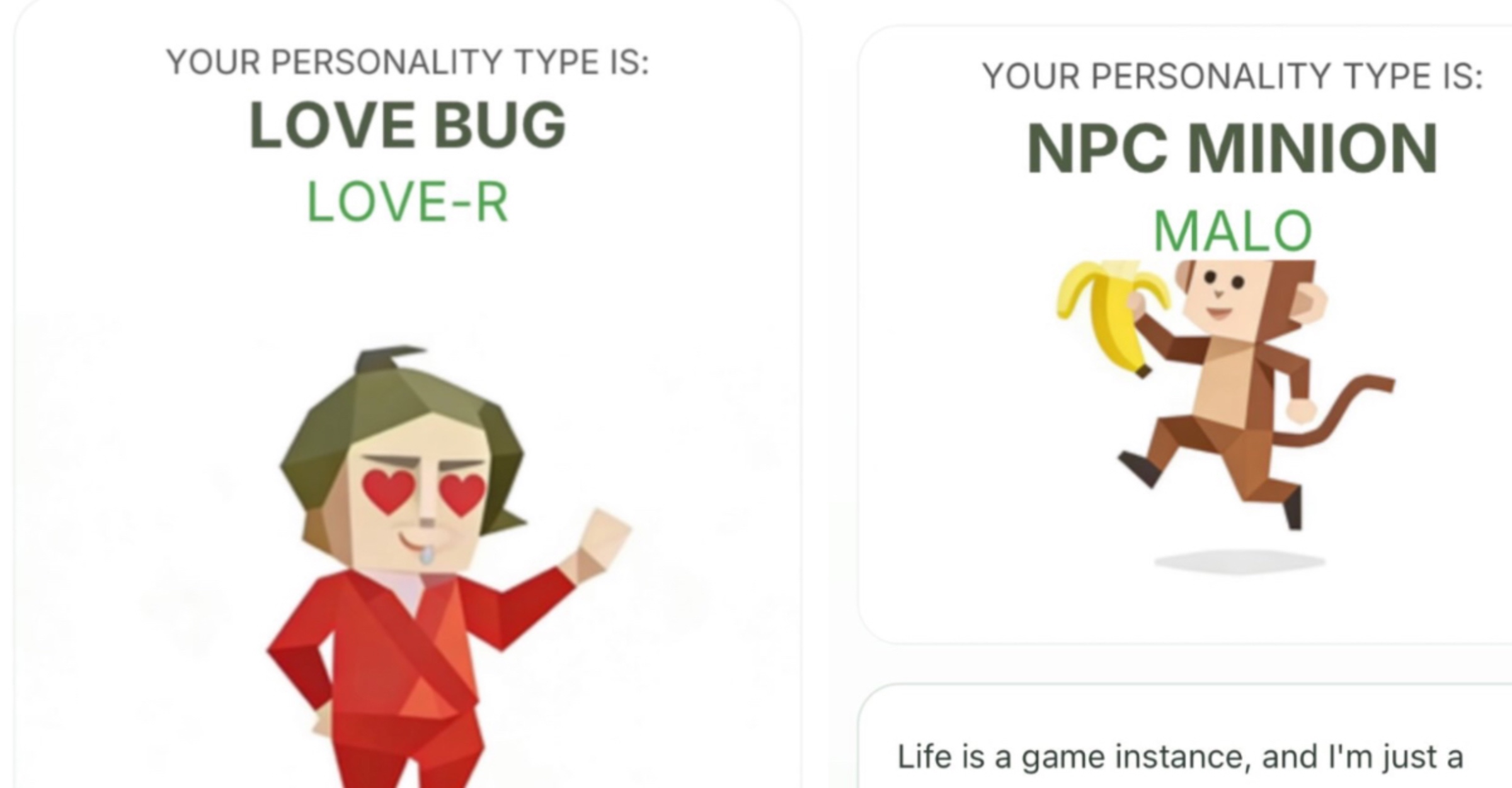
If you’ve been on Xiaohongshu or Weibo lately, you’ve likely seen the screenshots: chaotic, slang-heavy labels that look like an MBTI result but feel like a personal attack. Meet SBTI, the meme-style personality test that’s currently breaking the Chinese internet.
On April 9 alone, WeChat Index searches for “sbti” skyrocketed to 40.85 million. But unlike the formal, introspective world of the MBTI, SBTI functions as a quick-witted online joke fueled by irony and digital exhaustion.
Lihat siaran ini di Instagram
Just one night, SBTI, a chaotic new personality test, went viral on Chinese social media and even crashed servers. Dubbed the “S**t-Based Type Indicator,” it labels people as a “Joker” or “Sexy” and many other humorous types instead of standard MBTI codes. The creator later… pic.twitter.com/qlACQxuKnz
— Shanghai Daily (@shanghaidaily) April 10, 2026
More Meme Than Psychology
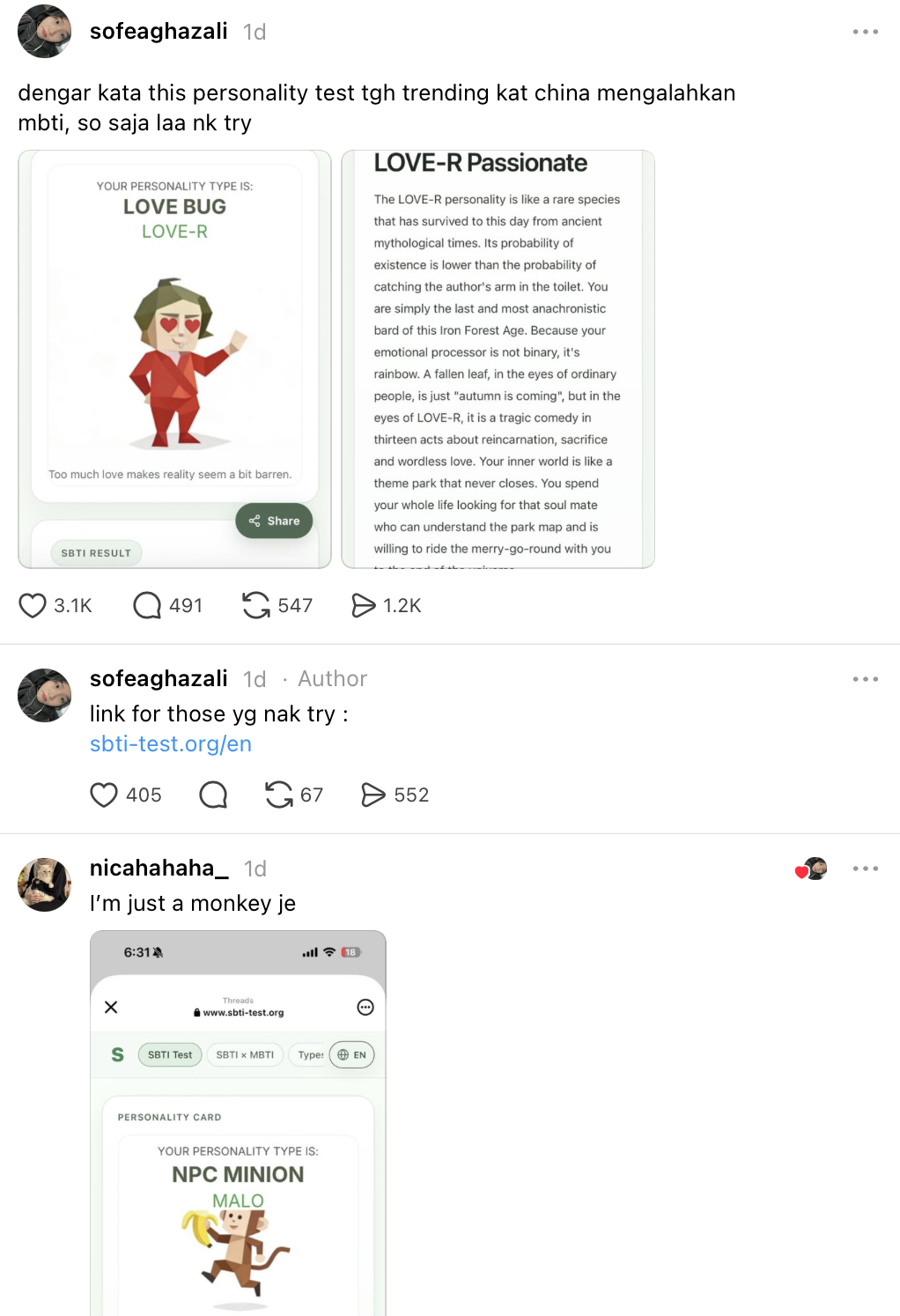
SBTI doesn’t actually care who you are deep down; it cares how “fried” your brain is today. The “SB” stands for shabi, a blunt slang term for “idiot”, setting the tone for an experience that is equal parts hilarious and cruel. Instead of “Architect” or “Advocate,” users are being branded as “Malou” (a tired monkey meme), “Money-Giver,” or “World-Hater.”
Why It’s Viral
The appeal lies in the lack of logic. With 31 messy, absurd questions and zero scientific backing, it’s the ultimate low-stakes social label. It started as a niche joke, originally designed by the creator to convince a friend to stop drinking and evolved into a cultural phenomenon that crashed servers.
In an era of “digital burnout,” SBTI is the perfect medium for self-deprecation. It’s not a personality foundation; it’s a snapshot of a mood.