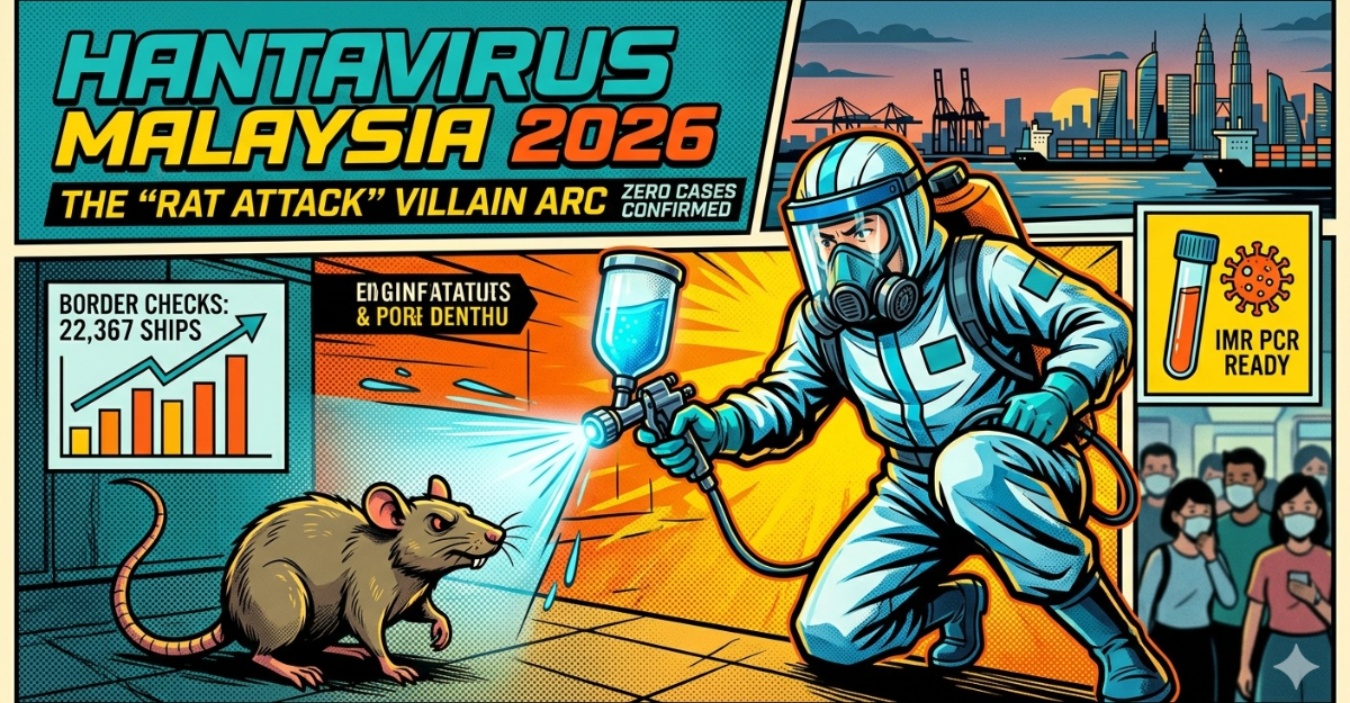
Hantavirus is the phrase on everyone’s lips after a recent scare involving the international cruise ship MV Hondius made the virus trend for all the wrong reasons. Forget the TikTok drama for a second, “Master Splinter” is officially the latest health villain to watch out for. But don’t panic. Malaysia is keeping things 100% under control.
The “Andes” Factor: Why the MV Hondius Mattered
While Hantavirus usually doesn’t spread between humans, the MV Hondius outbreak involved the Andes strain from South America. This specific strain is rare because it can actually spread human-to-human.
In fact, the situation hit close to home recently when two of our neighbors in Singapore were isolated at their National Centre for Infectious Diseases (NCID) after being on that ship. Fortunately, they both tested negative, but it served as a wake-up call for the region.
Hantavirus: The High-Stakes “Rat Attack”
Hantavirus doesn’t spread through your DMs but it’s transmitted via the urine, droppings, or saliva of infected rodents. Once those dry up and get kicked into the air, humans breathe them in.
- The Scary Stats: It can lead to Hantavirus Pulmonary Syndrome (HPS), a condition where your lungs fill with fluid.
- Vibe Check: The fatality rate is a massive 40%. There’s no specific vaccine or cure yet—just high-level hospital care.
Malaysia Update: Heightened Surveillance at the Borders
https://www.tiktok.com/@501awani/video/7638196405764459797?is_from_webapp=1&sender_device=pc
Health Minister Datuk Seri Dr Dzulkefly Ahmad confirmed that as of May 11, 2026, there are zero Hantavirus cases in Malaysia. However, the Ministry of Health (MOH) isn’t just chilling. Instead of a total lockdown, Malaysia is implementing Strict Screening and Heightened Surveillance to keep the public safe without triggering unnecessary panic:
- Vessel Screening: All international entry points (air and sea) are on high alert. Over 22,000 vessels have been screened to ensure no “uninvited” rodents are onboard.
- IMR Tech: The Institute for Medical Research (IMR) is locked and loaded with PCR testing to detect the virus instantly if it hits our shores.
- Maritime Rules: Ships from high-risk areas must present a Ship Sanitation Certificate before they can even touch our waters.
MOH Safety Alert: The “Wet” Cleaning Rule
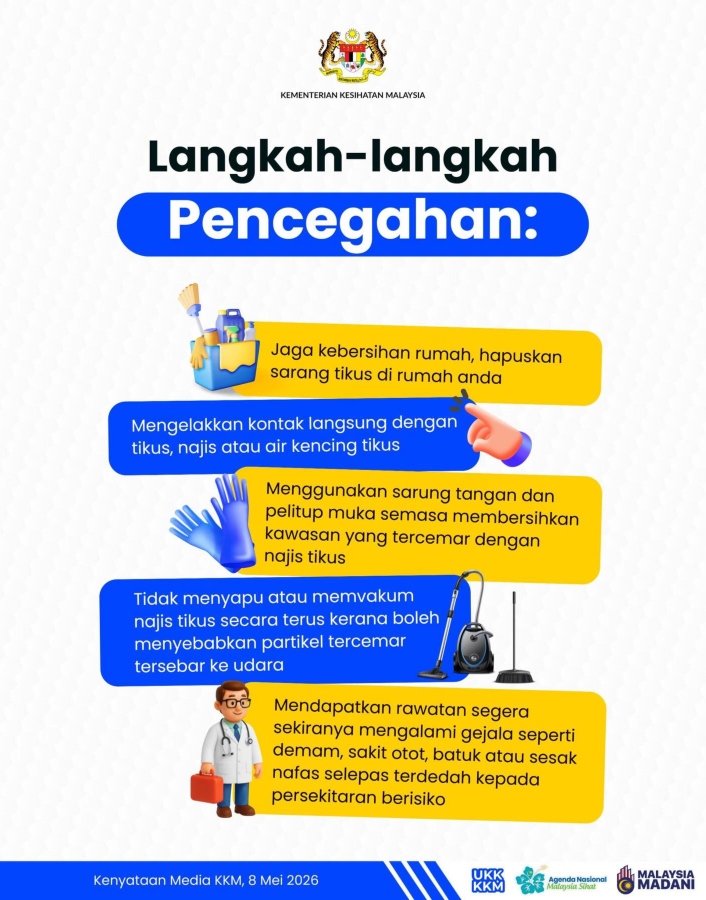
The Ministry of Health specifically warns not to sweep or vacuum rat droppings. Doing so kicks the virus into the air, making it easy to inhale.
- The Golden Rule: Always “wet” the area with bleach or a strong disinfectant first. This keeps the dust down and kills the virus before you wipe it away.
Don’t be an alarmist but don’t be complacent either. If your home has a rodent problem, now is the time to call pest control. Most importantly, if you feel feverish or short of breath after being near rat-prone areas, see a doctor immediately.